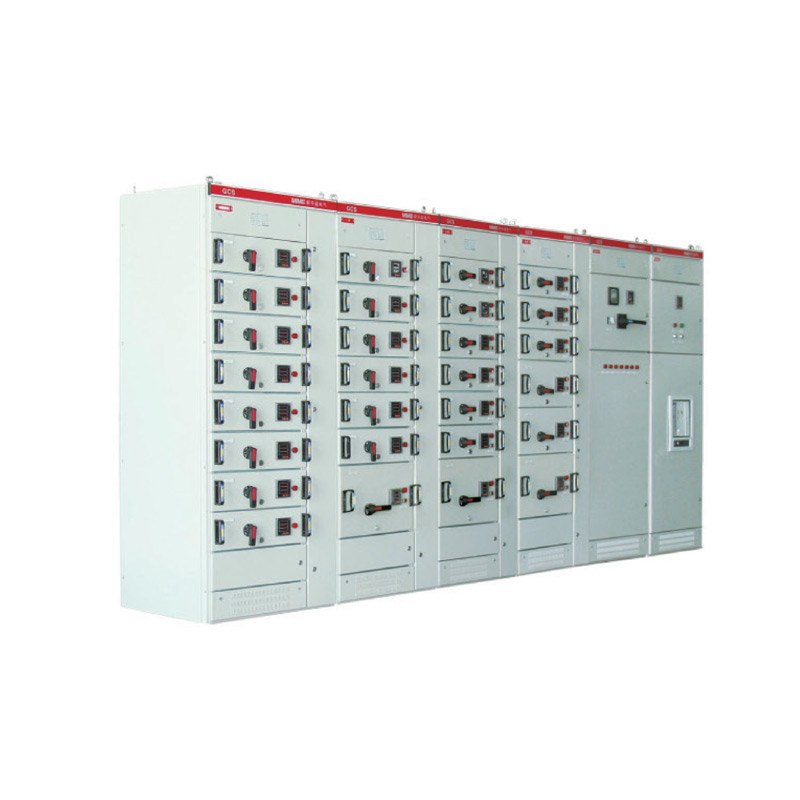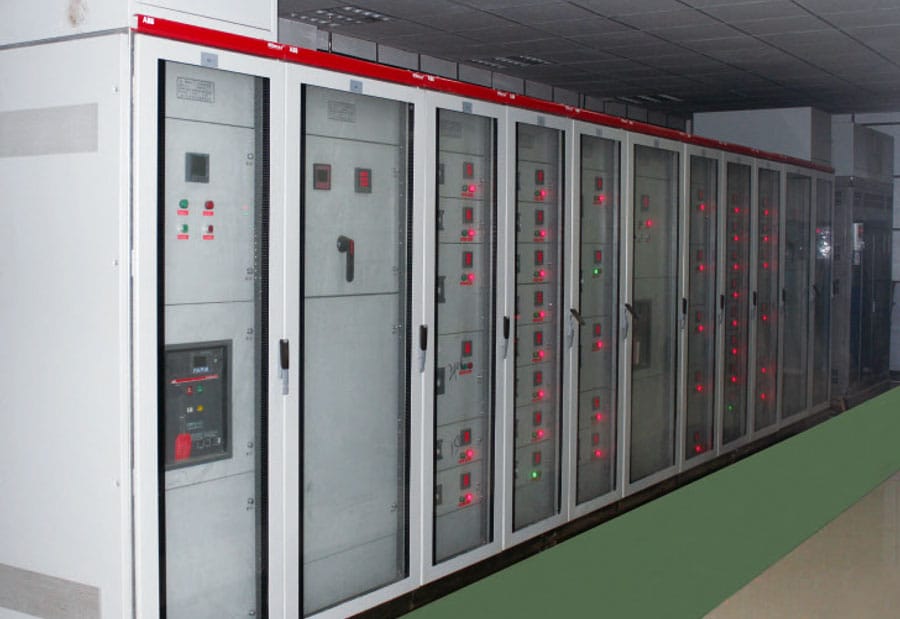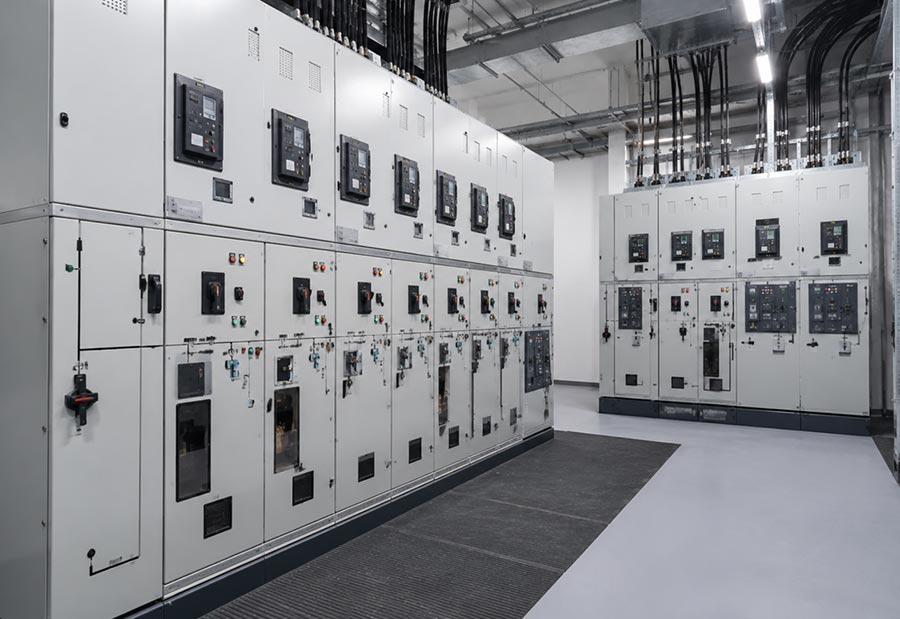
Table of Contents
Introduction
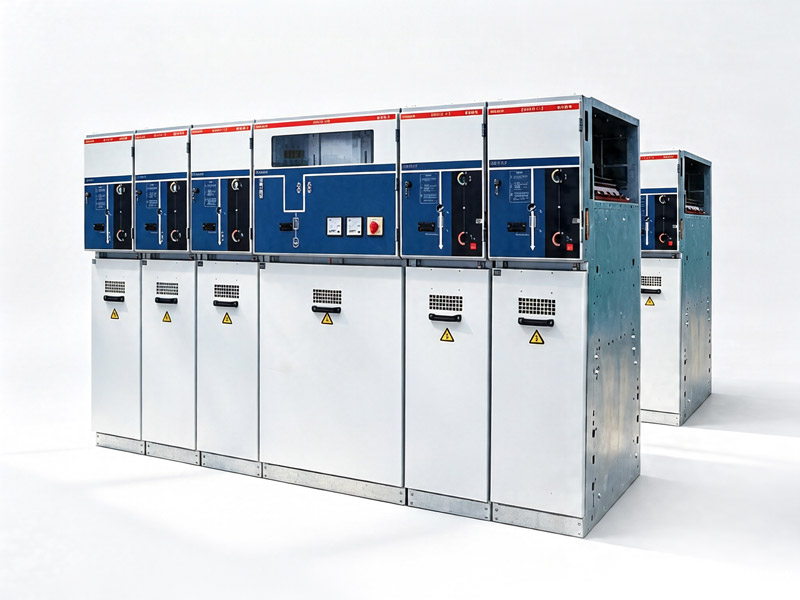
Ring Main Unit vs Switchgear is a common comparison in medium-voltage distribution projects because both types of equipment can perform switching, protection, isolation, and feeder-control functions. At first glance, the overlap can make the choice appear straightforward: compare voltage ratings, feeder quantity, and available installation space, then select whichever cabinet fits. In practice, that approach misses the main difference between them.
A Ring Main Unit is commonly used as a compact distribution node within a ring or radial medium-voltage network. It is particularly useful where several cable feeders, transformer connections, or secondary distribution points need to be organized within a relatively compact arrangement. Conventional medium-voltage switchgear, by contrast, is generally better suited to distribution points requiring more extensive feeder control, protection functions, metering, busbar arrangements, operational flexibility, and future panel expansion.
Neither type is automatically superior. The right choice depends on where the equipment sits in the electrical network, what circuits it must protect, how operators expect the system to behave during a fault, how much installation space is available, and how the system may develop over time. This Ring Main Unit vs Switchgear guide examines those differences from a practical project perspective so that equipment selection follows the actual electrical architecture rather than the cabinet name.
What Is a Ring Main Unit?
A Ring Main Unit, commonly abbreviated as RMU, is compact medium-voltage switching equipment used at distribution nodes where incoming and outgoing cable circuits need to be connected, switched, isolated, or protected. The general concept of a Ring Main Unit is closely associated with ring-distribution networks, although RMUs can also be used in radial arrangements depending on the system design.
A typical RMU may include load-break switching functions for ring feeders and a protected feeder for a transformer or another downstream circuit. Depending on the configuration, protection may involve a circuit breaker, fuse arrangement, relay protection, or other system-specific devices.
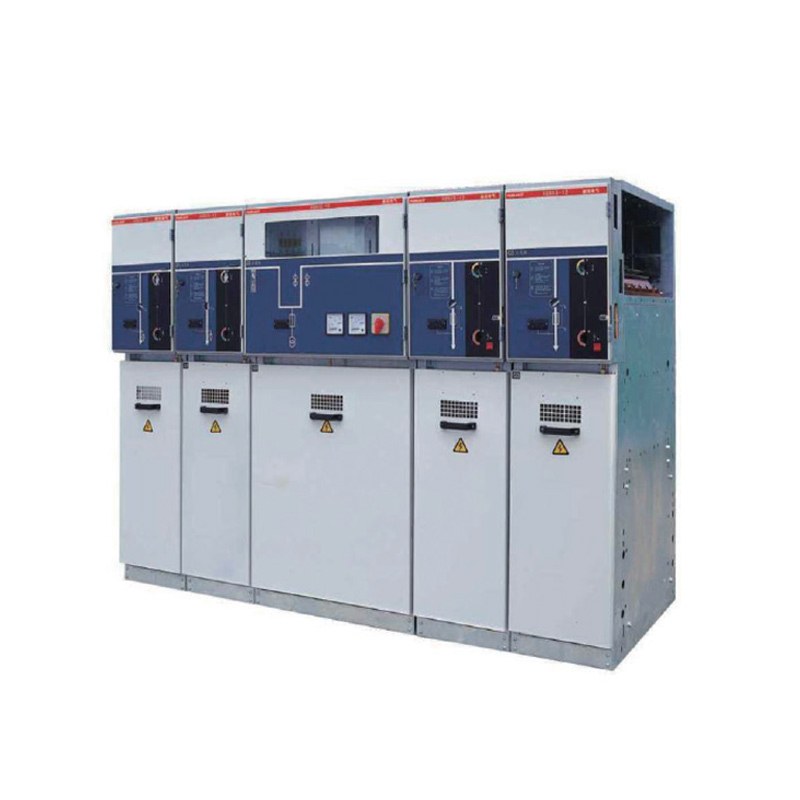
The main practical advantage is compact organization. Several medium-voltage feeder functions can be integrated into a relatively small footprint, making the RMU suitable for distributed nodes where a full multi-panel switchgear lineup would provide more functionality than the application actually requires.
However, compact construction does not mean the RMU is a simplified or lower-level piece of equipment. It still needs to match the network voltage, rated current, short-circuit conditions, cable arrangement, protection strategy, insulation system, installation environment, and maintenance requirements.
What Is Medium Voltage Switchgear?
Medium-voltage switchgear is a broader equipment category used to receive, distribute, switch, protect, control, meter, and isolate medium-voltage electrical circuits. Depending on the project, a switchgear lineup can contain incoming panels, outgoing feeders, transformer feeders, metering sections, bus couplers, protection relays, control devices, and other functional panels.
The defining characteristic is not simply a larger cabinet. It is the ability to organize a more extensive distribution architecture.
At a main distribution point, for example, power may arrive through one or more incoming circuits and then be distributed across several transformer feeders, process feeders, downstream substations, or other electrical sections. Different circuits may require different relay functions, circuit-breaker characteristics, metering, interlocking, or operating sequences.
In that situation, a full switchgear lineup often gives engineers greater flexibility to separate functions into defined panels and coordinate them around the system single-line diagram.
DFDL’s medium-voltage distribution solution similarly treats incoming power, feeder protection, transformer connections, cable access, panel arrangement, and future expansion as connected parts of the same system. That system-level view is particularly important when comparing Ring Main Unit vs Switchgear.
Difference 1: Their Typical Position in the Distribution Network
The first important difference is where the equipment normally sits in the electrical distribution hierarchy.
A Ring Main Unit is often installed at a secondary distribution node. Power may arrive from one cable route, pass through or branch toward another network section, and supply a local transformer or downstream feeder. Its compact configuration makes it particularly useful when medium-voltage power needs to be distributed across several separated load points.
Medium-voltage switchgear is more commonly associated with a central or higher-level distribution point. It can receive incoming power and divide it among several major feeders while providing more detailed protection, measurement, and operating control.
This difference is not absolute. An RMU can perform important protection functions, while conventional switchgear can also be used at smaller substations. The useful question is therefore not, “Which product is designed for medium voltage?” Both are.
A better question is:
What responsibility does this distribution point have within the wider network?
If the point mainly needs compact cable switching and transformer-feeder protection, an RMU can be highly practical. If the point needs a larger number of independently protected feeders, detailed relay functions, metering, bus sectionalizing, or substantial future development, conventional switchgear often provides a clearer architecture.
Difference 2: Ring Network Function and Feeder Flexibility
The name Ring Main Unit reflects one of its most recognizable applications: supporting ring-distribution structures.
In a ring arrangement, power can be routed through interconnected distribution points. Depending on network design and operating procedures, sections can be isolated while power is supplied through an alternative route. RMUs provide switching points that help divide the ring into manageable sections and connect local transformer loads.
This makes the feeder structure relatively focused. A typical RMU configuration may contain two network cable circuits and one protected transformer feeder, although other configurations are possible.
Conventional switchgear is usually more flexible when the project requires a broader range of feeder functions. A lineup can be assembled from multiple functional panels, allowing the design to include several incoming feeders, multiple transformer circuits, metering panels, bus couplers, outgoing distribution circuits, and specialized protection arrangements.
When comparing Ring Main Unit vs Switchgear, engineers should therefore examine not only how many feeders are required today but also whether those feeders perform similar or substantially different functions.
If the network consists of a repeated compact distribution pattern, an RMU can be efficient. If each feeder needs distinct protection, control, monitoring, or operating logic, a conventional switchgear lineup may be easier to organize.
Difference 3: Protection Philosophy
Protection is one of the areas where product appearance reveals very little about actual system performance.
Both RMUs and conventional switchgear can provide fault protection, but the level of protection complexity and flexibility can differ depending on configuration.
An RMU transformer feeder may use an arrangement specifically intended to protect a local transformer, while ring feeder circuits may mainly require load switching and isolation. In more advanced configurations, circuit breakers and relay protection can provide more detailed fault detection and control.
Conventional medium-voltage switchgear is frequently selected when each major feeder requires its own circuit breaker and a more extensive relay-protection strategy. Different panels can support different protection functions according to transformer characteristics, cable feeders, motor loads, or downstream systems.
The decision should therefore begin with a fault study and protection philosophy rather than the assumption that one type of equipment is always “more protected.”
Project teams should determine which device is expected to operate for each fault condition, what sections of the system should remain energized where possible, and how upstream and downstream protection should coordinate. Only then can they decide whether the required protection fits naturally within an RMU configuration or benefits from a conventional switchgear lineup.
Difference 4: Physical Footprint and Space Utilization
One of the strongest practical advantages of a Ring Main Unit is its compact footprint.
Where electrical equipment needs to be installed within limited space, the RMU can combine several medium-voltage feeder functions in a compact assembly. This can be useful at distributed substations, transformer nodes, infrastructure distribution points, and other locations where a long lineup of individual panels would be difficult to accommodate.
Conventional switchgear normally requires more floor space because functions are separated into individual panels or larger compartments. That additional space is not necessarily inefficient. It can provide easier cable access, more separation between functions, room for protection and control devices, and a clearer path for future panel additions.
This creates an important tradeoff.
Compactness reduces footprint, but greater panel space can improve accessibility and configuration flexibility.
A project should therefore avoid choosing an RMU solely because it is smaller. Space savings have value only when the compact arrangement still provides appropriate cable termination, operation, inspection, protection, and maintenance access.
Likewise, a larger switchgear lineup should not be selected merely because more space is available. Additional panel length should support a genuine electrical or operational requirement.
Difference 5: Cable Connection and Routing
Cable arrangement is a major part of the Ring Main Unit vs Switchgear decision because medium-voltage cables require practical space for routing, bending, termination, identification, and inspection.
RMUs are often designed specifically around cable-connected distribution networks. Their compact arrangement can make them well suited to nodes where several medium-voltage cables enter and leave a defined distribution point.
However, compact equipment requires careful attention to termination space. Cable size, entry direction, bending requirements, connector arrangement, trench position, and future circuit requirements should be confirmed before the equipment configuration is finalized.
Conventional switchgear can provide larger dedicated cable compartments, which may be advantageous where multiple large cables, current transformers, surge-protection devices, or more complex termination arrangements are involved.
The physical cable route should therefore be studied alongside the electrical single-line diagram.
A system can look simple on paper because each feeder is represented by one line. In the actual installation, that line becomes a substantial cable requiring physical space and a safe termination path. Equipment selection should reflect that reality.
Difference 6: Metering, Control, and Monitoring Capability
Both RMUs and conventional switchgear can incorporate monitoring and control functions, but project requirements can influence which structure is easier to configure.
At a relatively simple distribution node, operators may mainly need switching status, fault indication, current information, and selected remote-control functions. These features can often be integrated effectively into an RMU configuration.
A main medium-voltage distribution point may require more extensive information. Individual feeder measurements, protection records, relay communication, busbar status, circuit-breaker control, interlocking, automation interfaces, and centralized monitoring may all need to be coordinated.
Conventional switchgear can provide more space and functional separation for these systems, particularly where each feeder has its own protection and control requirements.
The correct decision does not depend on which equipment can contain the greatest amount of technology. It depends on what information operators actually need.
Every monitoring function should answer an operational question. If fault information is collected, there should be a clear reason for using it. If remote switching is included, the system should have defined control authority and interlocking logic. If temperature monitoring is provided, maintenance teams should understand what trends require investigation.
Technology adds the most value when it supports a specific operating decision.
Difference 7: Expansion and Network Development
Future expansion can significantly influence whether a Ring Main Unit or conventional switchgear provides a better long-term fit.
An RMU can be selected with a configuration that accommodates known future feeder requirements, but its compact construction means expansion should be planned deliberately. Adding functions later may depend heavily on the original equipment architecture and available system capacity.
Conventional switchgear can often provide a clearer path for structured lineup expansion. When space and busbar arrangements have been planned appropriately, additional functional panels can be incorporated into a growing distribution system.
However, physical expansion space should never be confused with electrical expansion capacity.
A vacant panel position does not prove that the transformer, incoming feeder, busbars, cables, protection settings, or network fault level can support additional load. The same principle applies to spare feeder provisions in an RMU.
Good expansion planning therefore starts with expected system development. If future transformers, feeders, or load areas are already known, the current configuration should reflect those realistic requirements. If expansion is merely a vague possibility, excessive equipment capacity can add unnecessary complexity without providing practical value.
Difference 8: Maintenance and Operating Strategy
The maintenance strategy should influence equipment selection from the beginning.
A compact RMU may reduce the physical number of panels that need to be managed at a remote distribution point. Depending on its internal construction and insulation technology, it can also provide a highly integrated arrangement of switching and protection functions.
At the same time, compact integration means technicians need to understand the equipment’s specific operating, testing, isolation, and cable-access procedures.
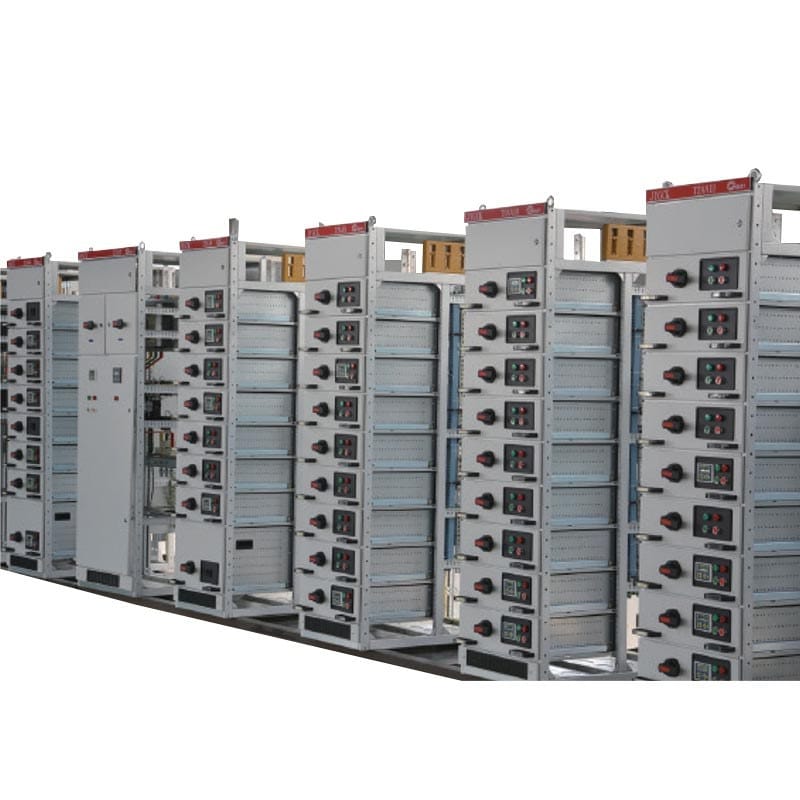
Conventional switchgear provides greater physical separation between functional panels. This can make individual feeder identification and certain maintenance tasks more straightforward, particularly in systems where circuit breakers, relay compartments, and cable areas are clearly separated.
Withdrawable breaker arrangements, where used, can also influence maintenance procedures because individual functional units can occupy defined service, test, or operating positions according to the equipment design.
The best choice depends partly on how maintenance is actually organized. A system serving a critical central distribution point may justify more extensive service access and feeder separation, while a distributed network containing many compact nodes may benefit from standardized RMU configurations.
Maintenance requirements should therefore reflect the role of the equipment, not simply the preferences used on a previous project.
Ring Main Unit vs Switchgear Comparison Table
The following table summarizes the main practical differences between the two equipment types.
| Comparison Factor | Ring Main Unit | Medium Voltage Switchgear |
|---|---|---|
| Typical network role | Secondary or distributed network node | Main or higher-level distribution point |
| Network arrangement | Commonly suited to ring and compact feeder networks | Suited to broad radial, sectionalized, or complex distribution |
| Footprint | Compact | Usually larger multi-panel lineup |
| Feeder structure | Concentrated group of cable and transformer feeders | Greater variety of independently configured feeders |
| Protection complexity | Can range from basic switching to breaker and relay protection | Often supports extensive feeder-specific relay protection |
| Cable interface | Strong focus on compact cable-connected distribution | Larger cable compartments and flexible feeder arrangements |
| Metering and control | Suitable for defined node-level requirements | Well suited to extensive feeder-level monitoring and control |
| Expansion | Best when future requirements are identified early | Often provides clearer structured panel expansion |
| Maintenance | Compact, integrated maintenance approach | Greater functional separation and access |
| Typical selection priority | Space-efficient secondary distribution | Protection flexibility and system organization |
The table is not intended to create an absolute rule. Actual RMUs and switchgear designs vary, and specific products may provide functions that overlap substantially. The correct selection should always be based on the network architecture and project requirements.
When Is a Ring Main Unit the Better Choice?
A Ring Main Unit is often the stronger option when the electrical system needs a compact medium-voltage distribution node with a defined set of incoming, outgoing, and transformer feeder functions.
This type of arrangement is particularly practical when multiple distribution points are spread across a larger network. Instead of placing a complete switchgear lineup at every node, compact RMUs can organize local switching and protection while maintaining clear cable connections between different parts of the distribution network.
DFDL’s Ring Main Unit product category currently includes its XGN-12 RMU and positions ring main equipment within medium-voltage project distribution. The suitability of any particular configuration should still be determined from voltage, current, feeder quantity, protection, cable arrangement, site environment, and system requirements.
An RMU can also be useful when installation space is limited but the distribution node still requires organized medium-voltage switching. In these projects, compactness supports the system rather than becoming the primary objective.
If a node requires only several clearly defined feeder functions and does not need the extensive panel-level control of a central switchgear lineup, an RMU can provide an efficient and understandable architecture.
When Is Conventional Switchgear the Better Choice?
Conventional medium-voltage switchgear is often a better fit when the distribution point has a larger system responsibility.
A main distribution location may need several independently protected feeders, multiple transformers, busbar sectionalizing, feeder-specific metering, protection relays, interlocking, detailed control, or future panel additions. These requirements naturally favor an architecture where functions can be divided among dedicated panels.
Switchgear can also provide advantages where maintenance access and feeder separation are major priorities. Operators can more easily associate individual panels with particular circuits, while protection and control compartments can be organized around each feeder’s specific requirements.
This does not mean switchgear should automatically be selected whenever the project is technically demanding. Some modern RMU configurations also support advanced protection and automation.
The better decision comes from asking whether the system needs a compact node or a broader distribution platform.
That question generally provides more useful guidance than comparing individual technical features in isolation.
Can Ring Main Units and Switchgear Work in the Same System?
Yes. In many well-organized medium-voltage networks, Ring Main Unit vs Switchgear is not an either-or decision.
Conventional medium-voltage switchgear can serve as the primary distribution point, with outgoing feeders supplying several downstream RMUs. Those RMUs can then provide localized switching and transformer connections at distributed load points.
This creates a hierarchy in which each equipment type performs a role suited to its strengths.
The main switchgear provides centralized feeder organization, detailed protection, metering, and system control. Downstream RMUs provide compact switching and distribution at individual network nodes.
Such an arrangement can also help structure fault management. A problem at one downstream section can be addressed through the switching and protection hierarchy without requiring every distribution point to contain the same level of equipment complexity.
The key is coordination. Protection settings, cable ratings, switching procedures, feeder identification, and operating logic need to be developed as one system even when different types of equipment are used.
How Insulation Technology Influences RMU Selection
One additional factor in RMU selection is insulation structure.
Different Ring Main Unit designs can use different insulation approaches, and the choice can influence equipment dimensions, environmental behavior, inspection strategy, and long-term maintenance considerations.
This issue should not be separated from the Ring Main Unit vs Switchgear comparison because insulation technology is one reason RMUs can achieve compact construction. However, compactness alone should not determine the project choice.
The insulation system needs to match the operating environment, electrical requirements, expected maintenance strategy, and equipment lifecycle. Project teams should also understand what parts of the primary circuit remain accessible for inspection and what operating procedures apply to the particular construction.
Rather than assuming one insulation technology is always better, the correct approach is to compare how each design performs under the real environmental, electrical, and maintenance conditions of the project.
This subject deserves its own detailed comparison, particularly when choosing between gas-insulated and solid-insulated RMU configurations.
Common Ring Main Unit vs Switchgear Selection Mistakes
One common mistake is comparing only cabinet dimensions. RMUs are usually more compact, but footprint is only one part of the decision. A project that requires extensive feeder-specific protection and control can become unnecessarily complicated if compactness is treated as the main objective.
Another mistake is assuming an RMU is simply a smaller version of conventional switchgear. The products often serve different network architectures, and their internal organization reflects those roles.
The opposite mistake also occurs. Some project teams choose a full switchgear lineup for every medium-voltage node even when the local function consists of only a few cable and transformer feeders. This can increase equipment complexity without improving the actual distribution strategy.
Protection is another area where assumptions cause problems. Equipment type does not determine the complete protection philosophy. Fault-current levels, transformer characteristics, cable circuits, relay functions, and upstream coordination still need to be studied.
Finally, future expansion is sometimes handled by simply adding spare positions. A better approach is to identify what parts of the network are realistically expected to grow and determine whether the electrical and physical system can support that growth.
A Four-Question Decision Method
A practical Ring Main Unit vs Switchgear decision can often be made by answering four questions.
First, what is the role of the distribution point? If it is a compact secondary node connecting several cable circuits and a local transformer, an RMU may fit naturally. If it is a major distribution point controlling many independent feeders, conventional switchgear may be more appropriate.
Second, how complex is the protection requirement? A limited group of standardized feeder functions can work efficiently within an RMU. A system requiring extensive feeder-specific relay logic, busbar sectionalizing, and detailed control may benefit from a full switchgear lineup.
Third, what are the physical conditions? Installation footprint, cable trenches, termination space, access, environmental conditions, and maintenance clearance should all influence the decision.
Fourth, how is the network expected to develop? If future feeders and transformers are already planned, their impact on busbar capacity, panel arrangement, protection, and cable routing should be considered before current equipment is finalized.
Answering these four questions generally provides a clearer decision than comparing product brochures feature by feature.
Conclusion
Ring Main Unit vs Switchgear is fundamentally a comparison of distribution architecture rather than cabinet size. Both equipment types can switch, isolate, distribute, and protect medium-voltage circuits, but they are commonly optimized for different positions within the network.
A Ring Main Unit is particularly effective when a project needs compact feeder switching and transformer connections at distributed medium-voltage nodes. Its concentrated design can make ring and secondary distribution networks easier to organize without requiring a long switchgear lineup at every location.
Conventional medium-voltage switchgear becomes more valuable when a distribution point requires numerous independently protected feeders, detailed relay functions, extensive metering, busbar sectionalizing, greater physical separation, or structured future panel expansion.
Many systems benefit from using both. Main switchgear can organize higher-level distribution while RMUs provide compact downstream nodes. What matters is that protection, cables, ratings, switching logic, and maintenance strategy remain coordinated across the complete network.
The best Ring Main Unit vs Switchgear decision therefore starts with the single-line diagram and the actual role of each distribution point. When equipment follows the network architecture instead of forcing the network to follow a product type, the resulting system is generally clearer to operate, easier to maintain, and more adaptable to future requirements.
FAQ
What is the main difference between a Ring Main Unit and switchgear?
A Ring Main Unit is generally optimized for compact medium-voltage distribution nodes with a limited number of ring, cable, and transformer feeders. Conventional switchgear is commonly used where more independent feeders, detailed protection, metering, control, and structured expansion are required.
Is a Ring Main Unit a type of switchgear?
Yes. An RMU performs switching, isolation, distribution, and protection functions associated with medium-voltage switchgear. The term Ring Main Unit usually describes a compact configuration designed around ring or secondary distribution nodes rather than a large multi-panel distribution lineup.
When should I use an RMU instead of conventional switchgear?
An RMU is often suitable when the project requires compact medium-voltage cable switching, transformer-feeder protection, and several clearly defined feeder functions. Conventional switchgear may be more appropriate when the distribution point needs many independent circuits and more extensive protection or control.
Can an RMU and medium-voltage switchgear be used together?
Yes. Main switchgear can distribute power through several outgoing feeders to downstream RMUs, which then provide localized switching and transformer connections. The protection, cable ratings, switching procedures, and system operating philosophy should be coordinated across both equipment types.
Which takes up less space, Ring Main Unit vs Switchgear?
A Ring Main Unit is generally more compact because several feeder functions are integrated into a concentrated arrangement. Conventional switchgear normally requires more panel space but can provide greater functional separation, cable access, protection flexibility, and structured expansion for larger distribution points.