Table of Contents
Introduction
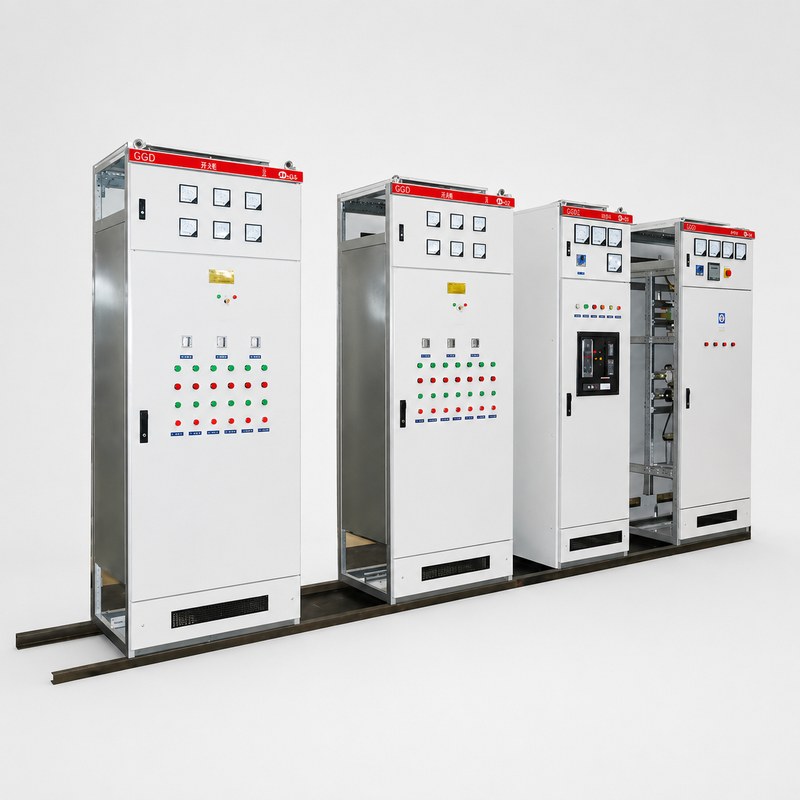
Power Distribution Box vs Distribution Cabinet is a common comparison when engineers, project planners, and facility teams are deciding how electrical power should be organized and distributed. The two products can appear similar because both contain electrical switching and protection components, receive incoming power, and distribute it to downstream circuits. Their practical roles, however, are often different.
A Power Distribution Box is generally associated with more localized branch distribution, where a relatively compact enclosure organizes several outgoing circuits close to the loads they serve. A Power Distribution Cabinet is usually selected when the distribution point carries broader responsibility within the electrical system, requires more internal space, handles larger or more complex feeder arrangements, or needs greater flexibility for control, metering, cable management, and future expansion.
The distinction cannot be reduced to physical size alone. A small cabinet is not automatically a distribution box, and a large enclosure does not automatically become a distribution cabinet. The correct choice depends on the electrical function, load structure, feeder quantity, installation method, conductor arrangement, maintenance strategy, and position of the equipment within the complete distribution network.
This guide compares Power Distribution Box vs Distribution Cabinet from a practical project perspective so you can decide which arrangement better fits a particular electrical system.
What Is the Functional Difference Between the Two?
The most useful way to compare a distribution box and a distribution cabinet is to begin with what each one is expected to do inside the electrical system.
A Power Distribution Box normally distributes power from one incoming circuit to several downstream branch circuits. Those circuits may supply lighting, equipment, building services, auxiliary systems, or other localized loads. This general operating concept is related to the function of a distribution board, where an incoming supply is divided among protected outgoing circuits.
A Power Distribution Cabinet often serves a higher-level or more centralized position in the electrical system. It may receive power from a transformer or another upstream distribution point and then divide that power among larger feeders, downstream boxes, motors, equipment groups, or other distribution sections.
The distinction is therefore primarily about system responsibility.
A distribution box usually sits closer to branch loads. A distribution cabinet often sits closer to the main or intermediate distribution level. There can be overlap, but understanding where the equipment sits in the single-line diagram is usually more useful than comparing the names printed on two product specifications.
Difference 1: Distribution Level and Load Responsibility
When comparing Power Distribution Box vs Distribution Cabinet, the first major difference is how much of the electrical system each unit is responsible for.
A distribution box commonly handles a defined group of downstream branch circuits. For example, several lighting circuits, auxiliary circuits, or equipment feeders can be organized within one enclosure. The incoming power has already passed through a higher-level part of the distribution system, so the box mainly focuses on dividing that supply into smaller protected circuits.
A distribution cabinet may operate one level higher. It can receive a larger incoming feeder and distribute power to several significant outgoing circuits. Some of those circuits may supply complete distribution boxes, production areas, equipment groups, or other electrical sections rather than individual small loads.
This affects more than current rating. Higher distribution responsibility can require larger conductors, more substantial busbar arrangements, additional metering, greater cable space, more complicated protection coordination, and clearer separation between functional sections.
The best way to determine the required distribution level is to look at the single-line diagram. If the equipment mainly organizes local branch circuits, a distribution box may be the logical solution. If it forms an important central or intermediate distribution node, a cabinet may be more appropriate.
Difference 2: Enclosure Structure and Installation Method
Physical structure is one of the most visible differences, but it should be understood as a result of electrical requirements rather than the starting point.
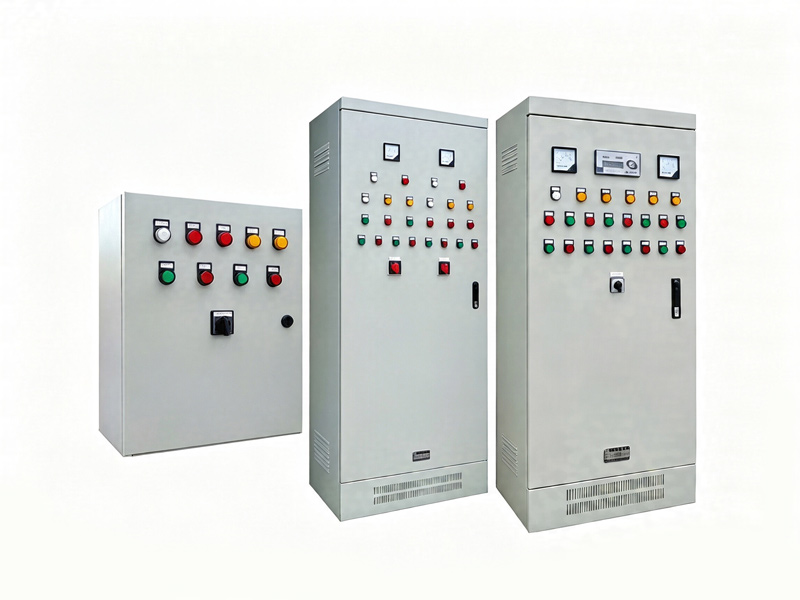
A Power Distribution Box is often designed for compact installation. Depending on the application, it may be wall mounted or integrated into a relatively limited installation area. Compact construction can be useful when the outgoing circuits are clearly defined and conductor dimensions remain manageable.
The available Power Distribution Box configurations illustrate how lighting, dual-power, and outdoor distribution requirements can be organized around different localized electrical functions.
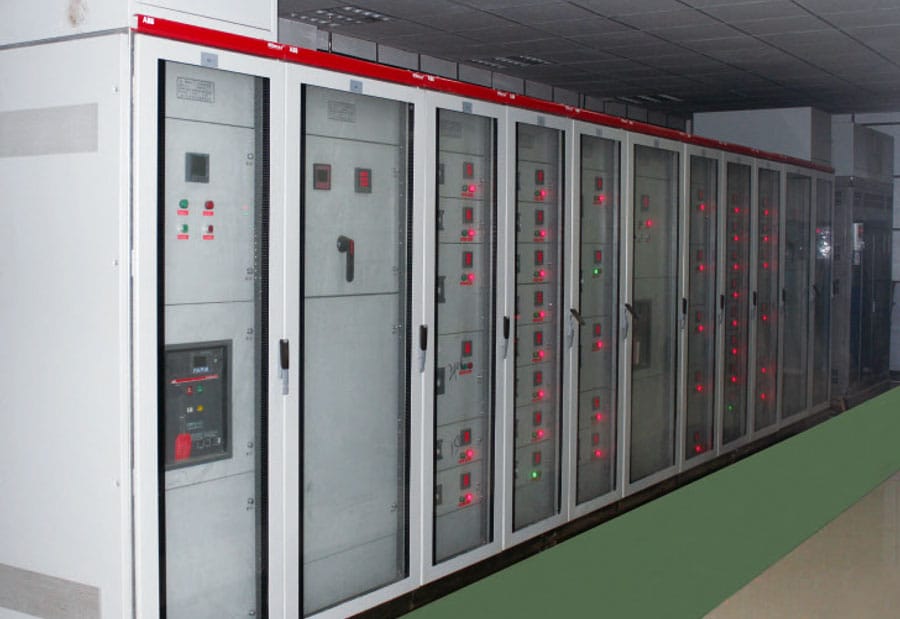
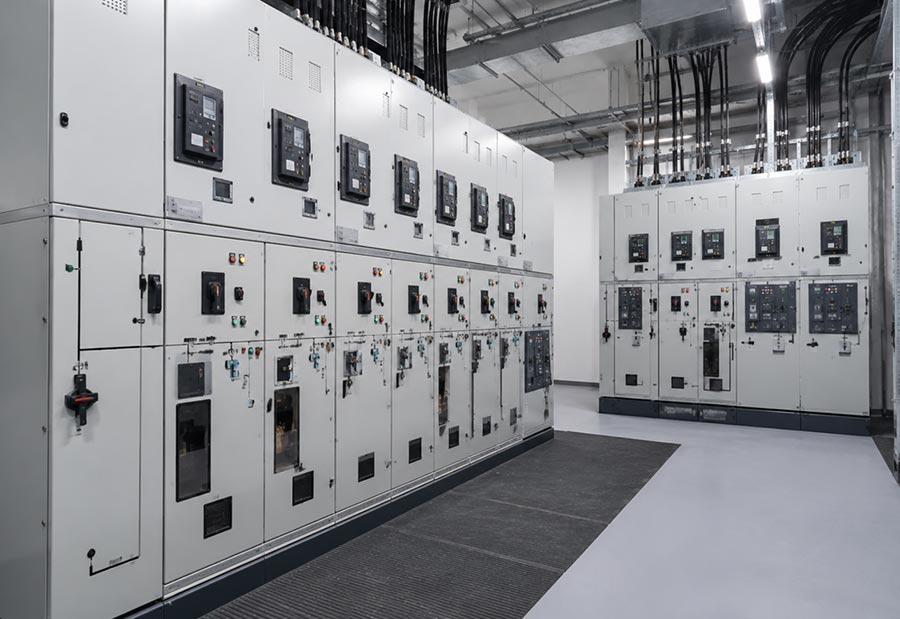
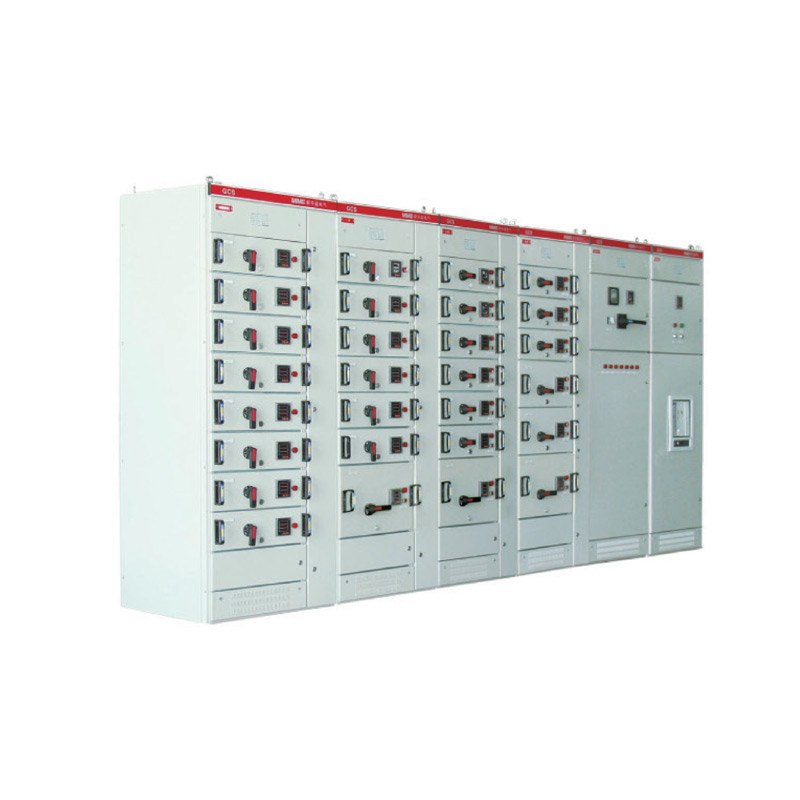
A Power Distribution Cabinet is more commonly associated with a floor-standing structure because larger internal equipment, busbars, incoming conductors, feeder cables, and maintenance space may require additional enclosure volume.
That does not mean installation method alone defines the equipment type. Instead, enclosure size should develop from the electrical layout. If larger cable bending space, more substantial terminals, multiple functional areas, or future feeder development are required, a cabinet structure often provides more practical room.
A good project should therefore determine the internal arrangement first and allow the enclosure form to follow.
Difference 3: Internal Circuit Arrangement
A distribution box typically has a relatively direct electrical arrangement. Power enters through an incoming protective or switching device, reaches an internal distribution arrangement, and then passes through individual protective devices to outgoing circuits.
This makes circuit identification straightforward when the box is correctly planned. Each outgoing circuit can correspond to a clearly defined load, and the physical arrangement can closely follow the circuit schedule.
A distribution cabinet can require a more structured internal architecture. Incoming sections, main busbars, outgoing feeders, metering components, control devices, compensation interfaces, terminals, and other electrical functions may all need their own logical positions.
The additional space is not valuable simply because it creates a larger cabinet. Its value comes from allowing functional areas to remain organized.
This distinction becomes particularly important as circuit complexity grows. Trying to place a cabinet-level distribution arrangement inside an enclosure intended for simpler branch distribution can create dense cable routing, poor access, unclear circuit paths, and difficult future maintenance.
When evaluating Power Distribution Box vs Distribution Cabinet, the question should therefore be whether the required internal architecture can remain clear, accessible, and maintainable within the proposed enclosure.
Difference 4: Incoming and Outgoing Cable Requirements
Cable size and cable quantity can quickly change the appropriate equipment choice.
A distribution box may have many outgoing circuits while still remaining relatively compact if the conductors are modest in size. Conversely, a system with only a few circuits can require substantial space when the cables have larger cross-sectional areas and need greater bending and termination room.
A distribution cabinet generally provides more flexibility for larger incoming and outgoing conductors. Additional internal depth and structured cable areas can help separate cable entry, routing, termination, and functional components.
Cable entry direction also matters. Top-entry and bottom-entry arrangements can require different internal layouts even when the electrical diagram is identical. If multiple large conductors enter from one area, termination space can become more important than the number of protective devices.
This is why counting breaker positions alone is not enough when comparing Power Distribution Box vs Distribution Cabinet.
The enclosure must support the real cables that will be installed. A circuit diagram can represent a cable with one simple line, but the physical cable requires space for bending, support, identification, termination, and future inspection.
Difference 5: Current Distribution and Thermal Conditions
Electrical current produces heat in conductors, connections, busbars, breakers, and other components. As the amount of distributed power and component density increases, thermal planning becomes more important.
A Power Distribution Box serving relatively modest branch circuits can often maintain a compact internal arrangement when the enclosure, load, component spacing, and environmental conditions are correctly coordinated.
A Power Distribution Cabinet may handle larger feeders or a greater concentration of electrical equipment. As a result, internal layout, component spacing, conductor arrangement, enclosure ventilation, and ambient conditions become increasingly important.
This does not mean every cabinet automatically operates at a higher temperature. Thermal performance depends on the actual electrical design. A poorly arranged distribution box can experience unnecessary heating, while a well-designed cabinet can provide effective internal space and heat management.
The useful selection question is whether the proposed enclosure can maintain an appropriate internal environment under realistic loading conditions.
If the only way to fit the required equipment is to place devices and conductors very close together, the project should reconsider whether the chosen enclosure format is suitable.
Difference 6: Maintenance and Working Access
Electrical equipment has to remain understandable after installation. This is one area where the difference between a compact distribution box and a larger distribution cabinet becomes particularly practical.
A Power Distribution Box can provide efficient maintenance access when circuits are clearly arranged, conductors are correctly routed, and devices remain accessible. For smaller branch systems, this simplicity can be an advantage because technicians can quickly identify the incoming device and associated outgoing circuits.
A Power Distribution Cabinet usually provides more working space around larger components and conductors. This can become valuable when technicians need to inspect busbar connections, check larger cable terminations, test protective devices, review metering components, or trace several feeder circuits.
However, cabinet size alone does not guarantee maintainability. Poor internal organization can make a large enclosure as difficult to understand as an overcrowded small one.
Maintainability comes from logical component arrangement, clear labeling, accessible terminals, organized conductors, accurate drawings, and sufficient working space.
The decision should therefore account for what technicians will need to inspect and service during the equipment’s operating life, not only how easily the equipment can be installed initially.
Difference 7: Expansion and System Development
Electrical systems often change after commissioning. Additional equipment may be connected, operating areas may expand, new feeders may be required, or monitoring functions may be introduced.
A Power Distribution Box can include spare positions for expected branch circuits, but the physical availability of an unused breaker position does not automatically mean the electrical system has spare capacity. The incoming circuit, conductors, internal distribution arrangement, thermal conditions, and upstream supply must also support additional load.
A Power Distribution Cabinet often provides more room for structured expansion, particularly when future feeder requirements are already known. Larger internal space can make it easier to accommodate additional equipment or conductor arrangements, but expansion still needs to be planned electrically.
This is an important distinction.
Physical expansion space and electrical expansion capacity are not the same thing.
A large cabinet cannot support unlimited additional load merely because there is unused space. Likewise, a compact box should not automatically be rejected when no meaningful future expansion is expected.
The most efficient choice reflects probable future requirements rather than adding unnecessary space without a defined purpose.
Power Distribution Box vs Distribution Cabinet Comparison
The following table summarizes the practical differences that should be considered during project planning.
| Comparison Factor | Power Distribution Box | Power Distribution Cabinet |
|---|---|---|
| Typical system role | Local or branch distribution | Main or intermediate distribution |
| Circuit responsibility | Defined group of downstream circuits | Broader group of feeders or distribution sections |
| Enclosure format | Often compact and wall mounted | Commonly larger and floor standing |
| Internal arrangement | Relatively direct | More structured and multifunctional |
| Cable requirements | Often smaller branch conductors | Can accommodate larger incoming and outgoing conductors |
| Busbar requirements | Usually suited to localized distribution | Often more substantial for broader distribution |
| Maintenance space | Compact but accessible when properly arranged | More room for feeder, busbar and component inspection |
| Expansion | Suitable for planned branch additions | Better suited to structured feeder expansion |
| Typical design priority | Efficient local circuit distribution | Capacity, organization and system coordination |
| Selection basis | Circuit schedule and localized load | Full distribution architecture and feeder requirements |
This table should be treated as a practical comparison rather than a rigid definition. Electrical systems vary, and product names can be used differently across projects. The final selection should always follow the actual function, electrical ratings, installation conditions, and required internal arrangement.
When Should You Choose a Power Distribution Box?
A Power Distribution Box is generally a strong choice when the electrical requirement is clearly localized. The equipment receives an established incoming supply and distributes it among a manageable group of branch circuits without requiring a large centralized feeder structure.
This can make the box particularly effective when space efficiency, straightforward circuit identification, and practical branch protection are important. Lighting distribution, auxiliary services, localized equipment groups, and other defined circuit arrangements can often be managed effectively within a compact enclosure.
The key is that compactness should not compromise cable access or thermal performance. If incoming and outgoing conductors can be routed properly, protective devices remain accessible, and future circuit requirements are understood, there may be little benefit in moving to a much larger cabinet.
Choosing a Power Distribution Box should therefore be based on functional simplicity, not simply an attempt to minimize enclosure dimensions.
When Is a Power Distribution Cabinet the Better Choice?
A Power Distribution Cabinet becomes more appropriate when the equipment needs to perform a broader role in the distribution hierarchy.
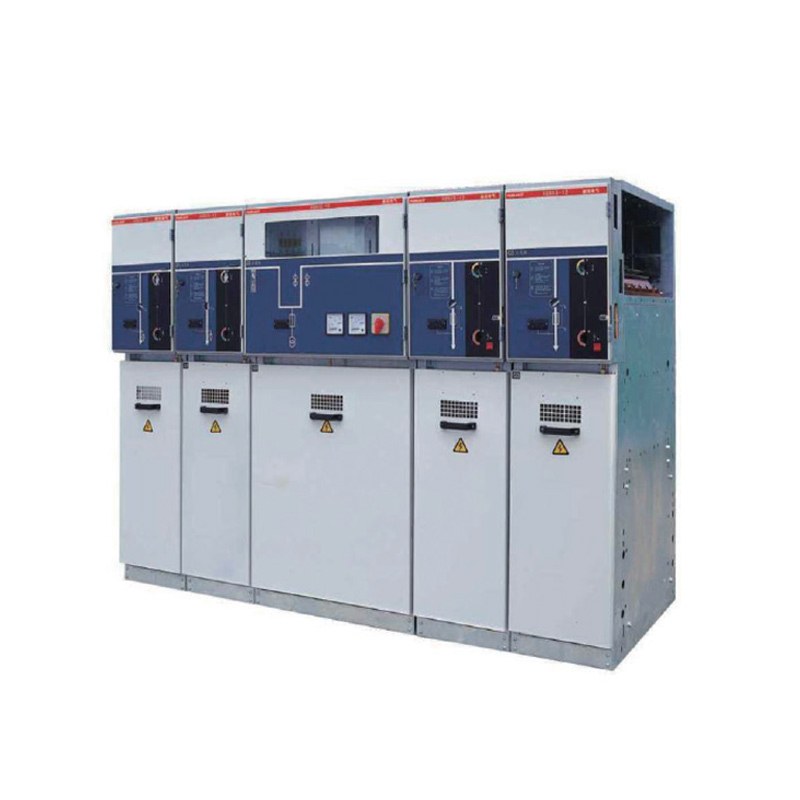
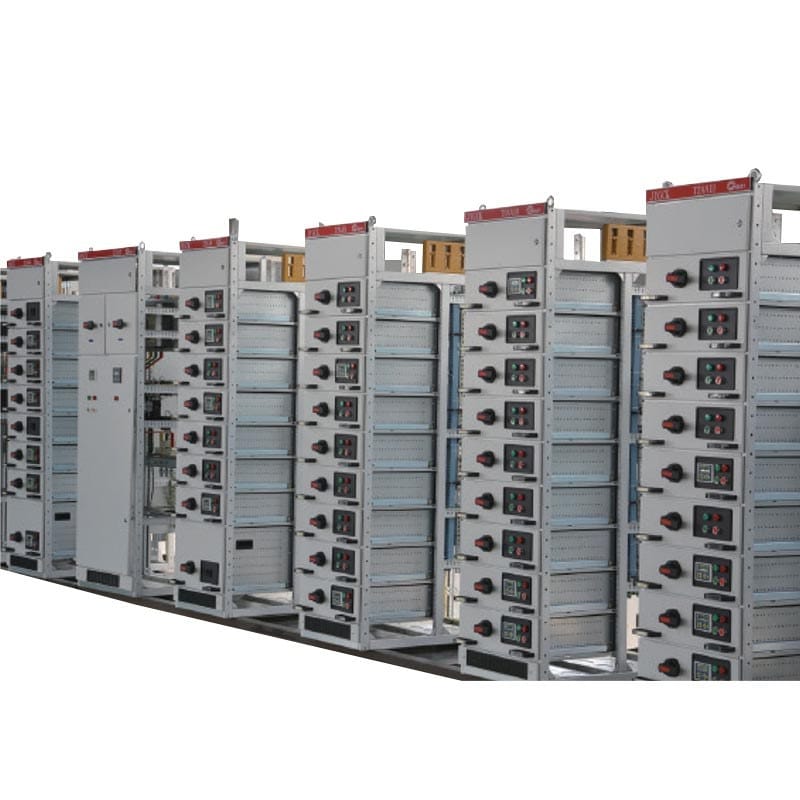
The current Power Distribution Cabinet range includes configurations intended for low-voltage distribution and integrated distribution applications, reflecting the greater variety of system functions that can be accommodated within cabinet-based equipment.
If the project involves larger feeders, more complex busbar arrangements, multiple functional sections, substantial incoming or outgoing conductors, additional metering or control requirements, or clearly defined future expansion, the additional space and structured layout of a cabinet can become valuable.
A cabinet can also provide a clearer interface between an upstream transformer or main supply and several downstream distribution points. In that role, it acts as an important organizing node within the wider electrical system.
Again, enclosure size is not the real reason to choose it. The cabinet is appropriate because the electrical responsibility requires a more structured arrangement.
Can a Distribution Box and Distribution Cabinet Be Used Together?
Yes. In many electrical systems, Power Distribution Box vs Distribution Cabinet is not an either-or decision.
A distribution cabinet can serve as a central or intermediate distribution point, while several downstream distribution boxes handle localized groups of branch circuits. This creates a hierarchy in which each equipment type performs the function best suited to its position in the system.
For example, the cabinet can receive an upstream supply and distribute power to several different operating areas. Each area can then use its own distribution box to organize individual branch circuits.
This arrangement can improve clarity because the main distribution function remains separated from localized branch distribution. A fault or maintenance requirement affecting one local group can also be easier to identify within a clearly structured distribution hierarchy.
The important point is that the relationship should be planned in the single-line diagram. Equipment should not be added simply because a circuit count has grown. Each distribution level should have a defined electrical purpose.
How Fault Current Influences the Choice
Normal operating current is only part of the equipment specification. Available short-circuit current also needs to be considered.
The fault level at a distribution point depends on the upstream electrical system. Transformer characteristics, conductors, system impedance, and network arrangement can all affect the current that may flow during an abnormal condition.
A main or intermediate distribution cabinet can be located closer to a significant power source and may therefore face different fault conditions from a downstream branch distribution box. This is not universal, but it illustrates why two pieces of equipment serving similar normal currents cannot automatically use the same protective arrangement.
Circuit breakers and other protective components need suitable capabilities for the fault conditions at their actual installation point. Internal current-carrying components also need to match the system requirements.
This is another reason the equipment name alone cannot determine the correct product. Power Distribution Box vs Distribution Cabinet needs to be evaluated within the actual electrical network.
How the Installation Environment Changes the Decision
The installation location can influence enclosure construction just as much as electrical function.
Indoor environments can still vary considerably. One box may operate in a clean electrical room, while another is installed closer to machinery, dust, moisture, vibration, or higher ambient temperature. Outdoor equipment requires additional attention to weather exposure, contamination, sealing, cable entries, condensation, and thermal conditions.
A compact distribution box may be suitable for one environment but require a different enclosure arrangement in another. A distribution cabinet can also need specific environmental protection depending on where it operates.
It is therefore better to define the actual conditions than to specify equipment with generic labels such as “indoor” or “outdoor” alone.
The installation assessment should consider the surrounding temperature, contamination, moisture risk, cable-entry direction, mounting conditions, available ventilation, and maintenance access. These factors help determine whether the electrical equipment will remain practical after it is installed.
Common Selection Mistakes
A common mistake in the Power Distribution Box vs Distribution Cabinet decision is assuming that the difference is simply small versus large. Size is only the visible result of other requirements. Electrical responsibility, conductor dimensions, feeder structure, internal components, and maintenance space are more useful criteria.
Another mistake is choosing equipment based entirely on the number of outgoing circuits. Ten small branch circuits and ten substantial feeders do not create the same enclosure requirements even though the circuit count is identical.
Future expansion is also frequently misunderstood. Choosing a large cabinet simply because expansion might happen someday can create unnecessary complexity, while selecting a compact box despite clearly planned additional feeders can create avoidable redesign later.
Another issue occurs when the enclosure is chosen before the single-line diagram is finalized. This reverses the design process. The electrical system should define the enclosure requirement, not the other way around.
Finally, protection and fault conditions should never be assumed to be identical across different distribution levels. Equipment should be evaluated at its actual position within the system.
A Three-Step Method for Making the Final Choice
A practical decision can be made by evaluating three areas: electrical role, physical requirements, and lifecycle requirements.
First, determine the electrical role. Ask where the equipment sits in the distribution hierarchy, what supplies it, what it supplies, how many circuits are involved, what current they carry, and how protection should be coordinated. If the equipment mainly handles localized branch circuits, a distribution box may be appropriate. If it operates as a more central distribution node, a cabinet may be more suitable.
Second, review the physical requirements. Consider conductor size, cable entry, termination space, internal components, ventilation, mounting arrangement, and maintenance access. The enclosure must accommodate the real equipment and cables without excessive congestion.
Third, consider the lifecycle of the system. Identify likely future feeders, load development, maintenance activities, documentation requirements, and any planned monitoring or control functions.
This method is more dependable than choosing from enclosure dimensions because it connects the product directly to the way the electrical system will actually operate.
Conclusion
Power Distribution Box vs Distribution Cabinet should not be treated as a simple comparison between a small enclosure and a large enclosure. The real difference lies in electrical function, distribution level, internal architecture, cable requirements, maintenance needs, and the amount of system responsibility assigned to the equipment.
A Power Distribution Box is generally well suited to localized branch distribution where the circuit arrangement is clear and compact installation provides practical benefits. A Power Distribution Cabinet is often more appropriate when the equipment forms a main or intermediate distribution point, handles larger feeders, requires greater internal organization, or needs more structured expansion capability.
In many systems, the best solution is not choosing one instead of the other. Both can work together at different distribution levels, with the cabinet organizing higher-level power distribution and downstream boxes managing localized circuits.
The most reliable decision begins with the single-line diagram, load structure, cable requirements, protection strategy, installation environment, and realistic future development. When those factors define the equipment choice, both distribution boxes and cabinets can perform their intended roles more clearly and remain easier to operate and maintain over time.
FAQ
What is the main difference between a Power Distribution Box and a Distribution Cabinet?
A Power Distribution Box usually manages localized branch circuits in a more compact enclosure, while a Distribution Cabinet often performs a broader main or intermediate distribution role. The actual distinction depends on system function, feeder arrangement, current, cables, and internal equipment.
Is a Power Distribution Cabinet always larger than a Power Distribution Box?
Not necessarily. Cabinets are commonly larger because they often contain larger feeders, busbars, cables, or additional functional sections, but physical size alone does not define the equipment. The correct classification should follow its electrical role and internal configuration.
Can a Power Distribution Box replace a Distribution Cabinet?
Only when its electrical ratings, circuit arrangement, cable space, protection, thermal conditions, and system role meet the actual requirements. A compact box should not replace a cabinet when doing so creates crowded wiring, insufficient capacity, poor access, or limited system organization.
Can a Power Distribution Box and Distribution Cabinet be connected together?
Yes. A Distribution Cabinet can operate as a higher-level distribution point and supply several downstream Power Distribution Boxes. This arrangement allows centralized feeder distribution to remain separate from localized branch circuits and can make the electrical hierarchy easier to understand.
How do I choose between Power Distribution Box vs Distribution Cabinet?
Start with the single-line diagram and determine the equipment’s role, load, feeder quantity, cable sizes, protection requirements, installation environment, maintenance needs, and future development. Select the enclosure only after these electrical and physical requirements are understood.