Table of Contents
Introduction
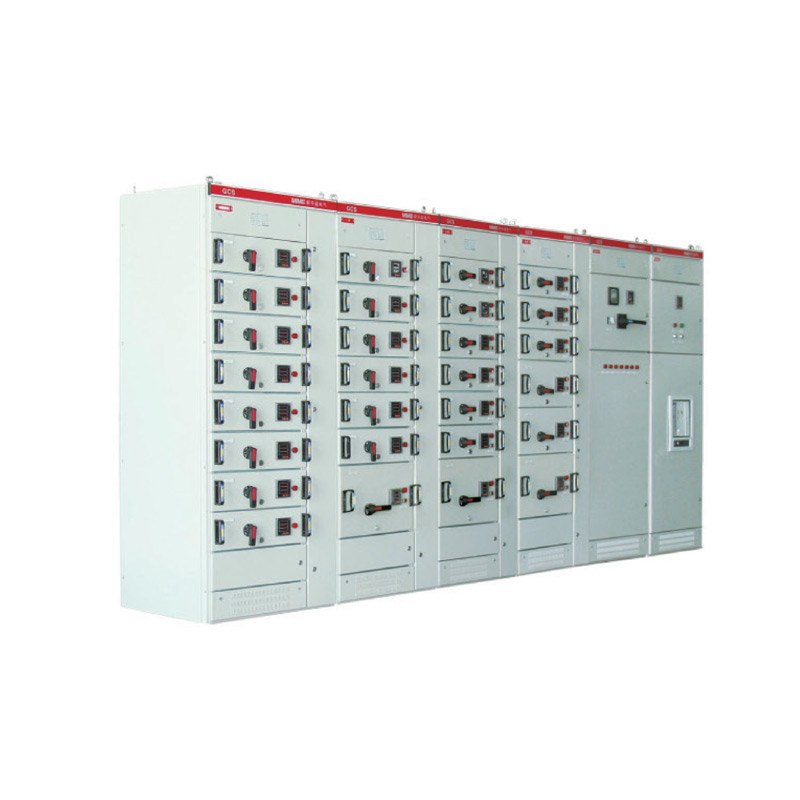
A Low Voltage Distribution Cabinet often spends most of its working life doing exactly what it was designed to do: receiving electrical power, distributing it to downstream circuits, and protecting the system without attracting much attention.
That quiet operation can be misleading.
Many cabinet problems do not begin as sudden failures. They develop slowly. A terminal becomes slightly less secure. Contact resistance rises. A ventilation path collects dust. A feeder begins carrying more load after new equipment is added. A breaker mechanism operates less smoothly than it once did.
None of these conditions necessarily stops the system immediately. That is precisely why maintenance matters.
Effective maintenance is not simply about keeping a cabinet clean. It is about finding changes early enough to understand what they mean. For a Low Voltage Distribution Cabinet, the most useful maintenance program combines electrical inspection, thermal observation, environmental control, mechanical checking, and historical records.
The five practices below provide a practical framework for doing that.
Why Low Voltage Distribution Cabinet Maintenance Matters
A Low Voltage Distribution Cabinet sits at an important point between the power source and the equipment that depends on it. Depending on its configuration, the cabinet may contain busbars, circuit breakers, switching devices, terminals, meters, control components, protective devices, and auxiliary circuits.
The basic role of switchgear is to control, protect, and isolate electrical equipment. In a low-voltage distribution system, those functions must remain dependable not only when the installation is new, but throughout years of changing operating conditions.
Several types of stress act on a cabinet during service.
Electrical current produces heat.
Connections experience repeated heating and cooling.
Mechanical devices age through operation and time.
Dust and moisture affect the internal environment.
Loads may change after the original installation.
Cables may be added or rerouted.
Ventilation conditions around the enclosure may change.
This creates an important maintenance principle: a cabinet should not be judged only by whether it is operating today.
A better question is whether its condition is moving away from normal.
That shift in thinking changes maintenance from a simple inspection routine into a form of condition management.
Tip 1: Inspect Electrical Connections and Busbar Joints
Electrical connections deserve close attention because small increases in resistance can create significant local heating.
A connection can still conduct electricity while its condition is deteriorating. If contact resistance increases, more heat is generated at that point. Continued heating can affect conductor surfaces, terminal hardware, nearby insulation, and eventually the stability of the connection itself.
The deterioration can become self-reinforcing:
Higher resistance → higher temperature → faster deterioration → still higher resistance.
This is why terminal inspection should involve more than checking whether a fastener looks tight.
Focus on High-Risk Connection Points
Typical inspection areas include:
- Incoming cable terminals
- Outgoing feeder terminals
- Main busbar joints
- Branch busbar connections
- Circuit breaker terminals
- Neutral connections
- Protective grounding connections
- Cable lugs and termination points
These locations carry current through physical interfaces, making their condition especially important.
During inspection, look for evidence of change.
Discoloration can indicate repeated heating.
Darkened or distorted insulation may suggest thermal stress.
Oxidation can affect contact surfaces.
An unusual odor may appear before obvious physical damage.
Differences between otherwise similar connections can also provide useful clues.
For example, if several comparable phase connections operate under similar conditions but one repeatedly runs hotter or looks noticeably different, that difference deserves investigation.
Avoid the “Tighten Everything” Approach
One maintenance mistake is assuming that every connection should simply be tightened during every inspection.
That is not a reliable strategy.
Fasteners, terminals, conductors, and equipment interfaces are designed around specific installation requirements. Excessive tightening can damage threads, terminals, conductor strands, or insulating components.
Maintenance should therefore follow the relevant equipment instructions and approved procedures rather than relying on uncontrolled force.
The goal is not maximum tightness. The goal is a stable electrical connection maintained within its intended mechanical condition.
Tip 2: Control Dust, Moisture, and Ventilation
A dusty cabinet may still operate normally, but contamination changes the environment in which electrical equipment must work.
Dust is not merely an appearance issue.
Accumulation on components can reduce heat dissipation. Fine particles can restrict ventilation paths. Some contaminants can absorb moisture or contain conductive material. Oil mist may create sticky surfaces that capture additional particles. Moisture can contribute to corrosion and insulation deterioration.
For this reason, cleanliness should be treated as part of electrical reliability.
Keep Internal Components Clean
Areas worth checking include:
- Busbar and insulator surfaces
- Breaker surfaces
- Control compartments
- Ventilation openings
- Filters
- Fans
- Cabinet floors
- Cable entry areas
- Metering sections
- Door edges and seals
The location of contamination can be as useful as the amount.
If dust repeatedly enters through one cable opening, the problem may be the opening rather than the cleaning schedule.
If contamination is concentrated around a ventilation path, airflow may be drawing particles into a particular section.
If moisture marks repeatedly appear near the cabinet base, maintenance personnel should investigate the surrounding environment instead of treating only the cabinet interior.
Good maintenance removes contamination.
Better maintenance identifies why the contamination appeared.
Check Ventilation and the Surrounding Environment
Heat produced inside a Low Voltage Distribution Cabinet must be able to leave the enclosure as intended.
Ventilation openings should remain unobstructed.
Where filters are installed, they should be inspected for restriction.
Where fans are used, their actual operation should be checked rather than assumed.
Equipment or stored materials placed near ventilation areas can change airflow even when nothing inside the cabinet has been modified.
Cabinet sealing also deserves attention.
Door seals, unused openings, cable entry points, and later modifications should be examined because an enclosure can lose part of its original environmental protection after installation changes.
A useful inspection therefore considers both the cabinet and the room around it.
Tip 3: Use Temperature as an Early Warning Signal
Heat is one of the most valuable clues available during electrical maintenance.
Many developing faults create abnormal temperature before they create obvious failure.
Possible causes of unusual heating include:
- Loose connections
- Increased contact resistance
- Overloaded feeders
- Uneven phase loading
- Poor ventilation
- Contaminated contact surfaces
- Deteriorating components
- Incorrect cable termination
- Changes in downstream load
However, temperature should never be interpreted without context.
A Hot Component Is Not Automatically a Fault
Consider two outgoing feeders.
One operates at a higher temperature than the other.
That does not automatically mean it is defective. The warmer feeder may simply be carrying more current.
This is why effective thermal inspection asks a more useful question:
Is this component warmer than expected for its actual operating condition?
Temperature should be considered alongside:
- Actual load
- Ambient temperature
- Similar components
- Phase-to-phase differences
- Cabinet ventilation
- Previous readings
- Recent changes to the system
Comparison makes thermal information far more useful.
If three phases carry similar current but one terminal is consistently warmer, the difference may indicate a local connection problem.
If the entire cabinet becomes warmer after additional loads are connected, the issue may be system loading or ventilation rather than one defective component.
Trend Is More Valuable Than a Single Reading
A single inspection gives you a snapshot.
Repeated inspections give you a trend.
Suppose a connection shows the following pattern:
First inspection: no unusual difference.
Second inspection: slightly warmer than comparable connections.
Third inspection: temperature difference has increased under a similar load.
The third observation becomes much more meaningful because previous records exist.
This is one of the strongest reasons to combine thermal observation with maintenance documentation.
A maintenance team that records changes can identify deterioration earlier than a team that repeatedly performs isolated inspections.
Any work around energized equipment must be carried out by qualified personnel using appropriate procedures and safety controls.
Tip 4: Verify Protection and Operating Devices
A Low Voltage Distribution Cabinet can look clean and show no obvious overheating while still containing components that no longer perform as intended.
Protection and operating devices should therefore receive functional attention appropriate to the equipment design.
Depending on the cabinet configuration, relevant components may include:
- Circuit breakers
- Isolating devices
- Operating mechanisms
- Auxiliary contacts
- Indicating devices
- Meters
- Control switches
- Interlocks
- Alarm circuits
- Protection-related control circuits
The purpose is not to operate equipment unnecessarily. It is to make sure that a device expected to perform a protection, switching, indication, or control function remains capable of doing so.
Mechanical Condition Is Part of Electrical Reliability
Electrical maintenance is often discussed in terms of voltage, current, insulation, and temperature.
But many electrical protection functions ultimately depend on mechanical movement.
Contacts must open.
Contacts must close.
Mechanisms must move freely.
Interlocks must engage correctly.
Operating handles and linkages must maintain their intended relationship with internal devices.
A component that remains in one position for a long period can look perfectly normal even though its mechanical condition has changed.
This is why visual inspection alone is incomplete.
The same principle applies to withdrawable or removable units where fitted. Mechanical alignment, operating position, connection condition, and interlocking functions are all part of dependable system operation.
Repeated Trips Need Investigation
Repeated breaker operation should never become a routine reset-and-forget event.
A breaker may be responding to:
- Actual overload
- A downstream fault
- Starting current
- Load imbalance
- Incorrect coordination
- A deteriorating connection
- Changing operating conditions
The protective device may be doing exactly what it is supposed to do.
Maintenance should therefore investigate the reason for repeated operation instead of treating every trip as a breaker problem.
Tip 5: Build a Condition-Based Maintenance Record
The fifth tip may have the greatest long-term value.
Record what you find.
Without records, every inspection starts almost from the beginning. Technicians may remember serious failures, but gradual changes are much harder to track from memory.
A structured maintenance history turns individual observations into evidence.
What Should Be Recorded
A practical Low Voltage Distribution Cabinet maintenance record may include:
- Inspection date
- Cabinet identification
- Feeder identification
- Operating condition
- Approximate load condition
- Temperature observations
- Visible contamination
- Connection abnormalities
- Ventilation condition
- Breaker condition
- Abnormal sound or odor
- Repeated trip events
- Components serviced
- Components replaced
- Modifications made
- Recommended follow-up work
The record does not need to become unnecessarily complicated.
Consistency matters more than volume.
A short record completed accurately after every inspection is more useful than a highly detailed form that technicians rarely complete.
Use the Record to Find Patterns
Imagine that one outgoing connection appears slightly warmer during an inspection.
By itself, that information may not justify a conclusion.
Now imagine that the same connection becomes progressively warmer across several inspections while the load remains similar.
The maintenance record has transformed a small observation into a meaningful trend.
The same approach works for other issues.
Repeated dust accumulation can reveal an enclosure or environmental problem.
Repeated breaker operation may point to changing downstream loads.
Repeated high cabinet temperature can indicate inadequate ventilation or increasing system demand.
Repeated modifications may indicate that the original distribution arrangement no longer matches actual operating requirements.
The purpose of documentation is therefore not simply administrative compliance.
It is to help maintenance personnel separate isolated events from developing patterns.
Practical Low Voltage Distribution Cabinet Maintenance Checklist
The following table provides a practical framework for routine inspection.
| Inspection Area | What to Examine | Warning Signs | Why It Matters |
|---|---|---|---|
| Incoming terminals | Connection and insulation condition | Discoloration, heat, deformation | Incoming faults can affect a large part of the system |
| Busbar joints | Joint surfaces and physical condition | Oxidation, abnormal heating, distortion | Supports stable high-current distribution |
| Outgoing feeders | Terminals, cables and breaker interfaces | Heat, damaged insulation, repeated trips | Helps identify feeder-level problems early |
| Circuit breakers | Physical and operational condition | Abnormal movement, heat, unexplained trips | Supports protection and isolation functions |
| Ventilation | Openings, filters and fans | Dust blockage, weak airflow, failed fan | Helps control internal temperature |
| Cabinet interior | Dust and foreign material | Heavy deposits, oil, conductive particles | Protects cooling and insulation performance |
| Enclosure | Doors, seals and openings | Gaps, damaged seals, moisture traces | Maintains environmental protection |
| Grounding | Protective connections | Corrosion, looseness, physical damage | Supports protective continuity |
| Metering and indication | Displays and status devices | Incorrect indication, failed display | Supports accurate system observation |
| Maintenance history | Previous findings and actions | Recurring unresolved conditions | Reveals trends that one inspection may miss |
A checklist is valuable, but it should never reduce maintenance to a box-ticking exercise.
The inspector still needs to ask why something has changed.
A Better Way to Evaluate Maintenance Risk
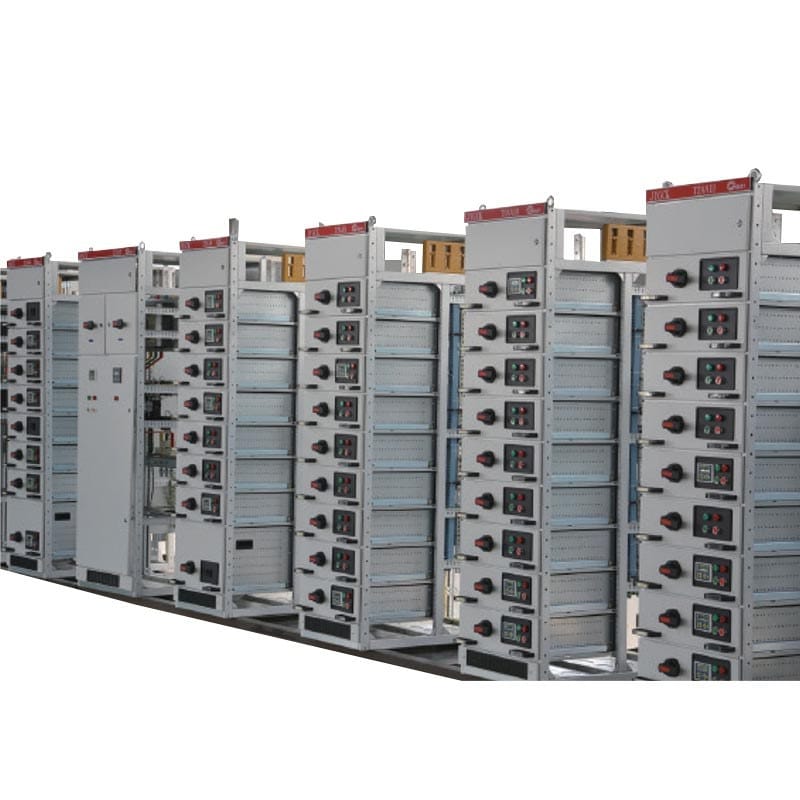
One of the weaknesses of routine maintenance is that every inspection point can begin to receive the same level of attention.
In practice, not every component carries the same risk.
A more useful approach is to evaluate each finding through three signals.
Signal 1: Current Condition
What does the component look like now?
Is there heat, contamination, discoloration, corrosion, noise, odor, or mechanical damage?
Signal 2: Comparison
How does it compare with equivalent components?
Is one phase different from the others?
Is one feeder hotter under a similar load?
Is one section collecting substantially more dust?
Comparison helps separate normal operating characteristics from anomalies.
Signal 3: History
Has the condition changed?
Is it getting worse?
Has it appeared before?
Was an earlier corrective action effective?
When current condition, comparison, and history all point in the same direction, the maintenance finding becomes much stronger.
This three-signal method is especially useful because it reduces two common problems: reacting too quickly to normal differences and overlooking slow deterioration.
Prioritize by Consequence
Maintenance priority should also consider what happens if the component fails.
An incoming connection, main busbar joint, or critical feeder may deserve more attention than a lower-consequence auxiliary circuit even if both currently appear normal.
This does not mean lower-priority components can be ignored.
It means maintenance effort should reflect both likelihood and consequence.
That is a more useful risk model than simply spending equal time on every section of the cabinet.
Common Low Voltage Distribution Cabinet Maintenance Mistakes
Several maintenance habits can create a false sense of security.
Cleaning Without Diagnosing
Removing dust is useful, but repeated contamination in the same location should trigger a search for the source.
Otherwise, maintenance repeatedly treats the symptom.
Tightening Without Evidence
Uncontrolled tightening is not preventive maintenance. Connections should be assessed and serviced according to the appropriate equipment requirements.
Ignoring Load Changes
The cabinet may be unchanged while the facility around it has changed dramatically.
Additional machinery, lighting, process equipment, control systems, or other loads can alter feeder loading and internal heat conditions.
Resetting Breakers Without Investigating
A protective device that repeatedly operates is communicating information about the system.
Simply restoring it without understanding the cause removes the symptom but not necessarily the problem.
Ignoring the Space Around the Cabinet
Blocked ventilation, stored materials, dust-producing equipment, moisture sources, or changes to the electrical room can affect cabinet performance even when the enclosure itself has not been modified.
Failing to Update Documentation
When circuits are changed but labels, diagrams, and maintenance records are not updated, later troubleshooting becomes slower and more error-prone.
Accurate documentation is part of maintainability.
How Often Should a Low Voltage Distribution Cabinet Be Maintained?
There is no single inspection interval that is equally appropriate for every Low Voltage Distribution Cabinet.
Maintenance frequency should reflect actual operating conditions.
Relevant factors include:
- Load level
- Load variation
- Switching frequency
- Ambient temperature
- Dust exposure
- Moisture exposure
- Ventilation conditions
- Equipment age
- Previous fault history
- Criticality of connected loads
- Frequency of system modification
Two cabinets with similar designs can require different maintenance strategies.
One may operate with stable loads in a clean electrical room.
Another may operate continuously in a dusty process environment with frequent load changes.
Treating them identically would ignore the actual conditions affecting deterioration.
A stronger maintenance strategy combines planned inspections with condition-based decisions.
Instead of asking only:
“Is it time for the next inspection?”
Also ask:
“What has changed since the previous inspection?”
That second question is where much of the real maintenance value comes from.
When a Maintenance Issue Is Actually a System Issue
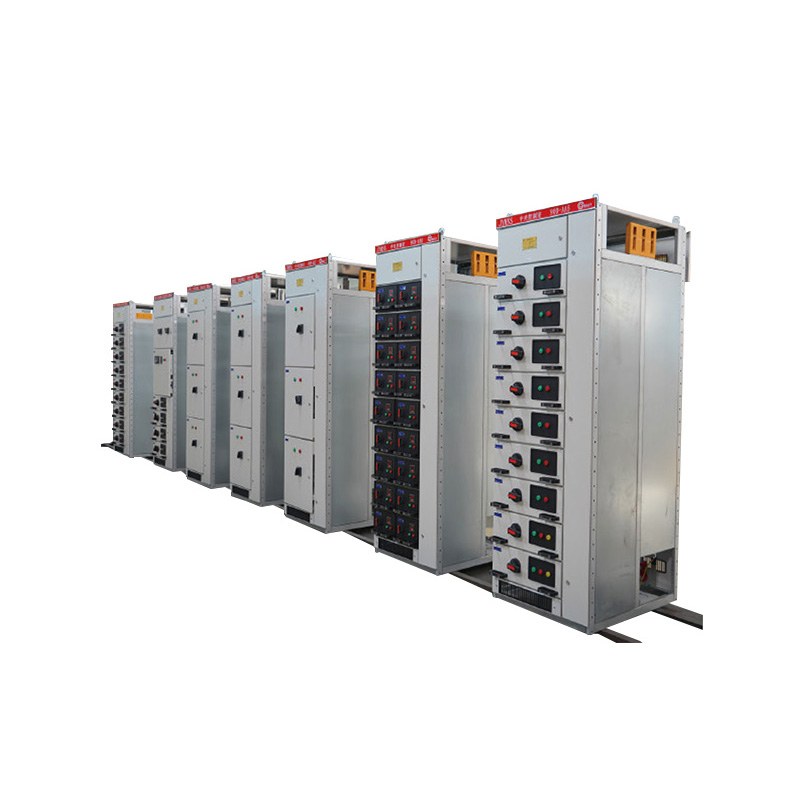
Repeated cabinet problems sometimes indicate that the cabinet itself is not the root cause.
Consider several examples.
If multiple feeders gradually operate closer to their capacity, the underlying issue may be load growth.
If internal temperatures remain high despite clean ventilation paths, the cabinet arrangement or surrounding thermal conditions may need review.
If additional circuits make cable routing increasingly crowded, the system may be outgrowing its original configuration.
If technicians repeatedly make temporary wiring changes, the present distribution architecture may no longer match actual operating needs.
If the same protective device continues operating, the downstream circuit requires investigation rather than endless resetting.
At this point, maintenance information becomes valuable for engineering decisions.
A review of the wider Power Distribution Cabinet configuration can consider circuit arrangement, enclosure type, incoming and outgoing structure, accessibility, cable routing, protection, and future expansion as connected design issues rather than isolated maintenance tasks.
A good maintenance team therefore does more than find faulty parts.
It recognizes when repeated symptoms are telling a larger system story.
How Better Cabinet Design Makes Maintenance Easier
Maintainability begins before maintenance starts.
A Low Voltage Distribution Cabinet that is logically arranged and well documented is easier to inspect throughout its service life.
Several design characteristics can improve long-term maintenance.
Clear feeder identification reduces tracing time.
Logical circuit arrangement makes the power path easier to understand.
Accessible connection points improve inspection efficiency.
Adequate cable space makes later modifications easier to control.
Suitable ventilation helps manage internal heat.
Reserved expansion capacity can reduce disorder when new circuits are required.
Accurate diagrams help technicians compare the physical cabinet with the intended electrical arrangement.
Good separation between power, control, and auxiliary sections can also make inspection more organized.
These characteristics matter because maintenance access is not merely a convenience.
Poor accessibility can make inspection slower, encourage incomplete checks, and make small abnormalities harder to see.
When selecting a new cabinet, it is therefore worth asking not only:
“Can this cabinet meet today’s electrical requirements?”
Also ask:
“Will technicians still be able to understand, inspect, and maintain it after the system changes?”
That question often reveals long-term value that cannot be seen from electrical ratings alone.
FAQ
How often should a Low Voltage Distribution Cabinet be inspected?
Inspection frequency should be based on load, environment, equipment condition, switching activity, fault history, and the importance of connected circuits. A condition-based approach is more useful than applying one fixed interval to every cabinet regardless of operating conditions.
What causes a Low Voltage Distribution Cabinet to overheat?
Common causes include loose connections, increased contact resistance, overloaded feeders, uneven phase loading, restricted airflow, contamination, or deteriorating components. Temperature findings should always be compared with actual load and previous inspection records.
Can dust damage a Low Voltage Distribution Cabinet?
Yes. Dust can restrict airflow, reduce heat dissipation, accumulate on insulating surfaces, and combine with moisture or other contaminants. Regular cleaning helps, but identifying where contamination enters the cabinet is usually more valuable for long-term reliability.
What parts of a Low Voltage Distribution Cabinet need the most attention?
Incoming terminals, busbar joints, outgoing feeder connections, circuit breakers, grounding connections, ventilation paths, and heavily loaded circuits deserve close attention. Inspection priority should also reflect the consequence of failure and previous maintenance history.
What should be recorded during Low Voltage Distribution Cabinet maintenance?
Useful records include load condition, temperature observations, contamination, terminal condition, breaker activity, ventilation status, repeated faults, maintenance actions, replaced components, and recommended follow-up work. Consistent records make gradual deterioration easier to identify.
Conclusion
The most effective Low Voltage Distribution Cabinet maintenance program is not the one that performs the largest number of tasks. It is the one that notices meaningful changes early and understands what those changes are saying about the system.
Start with the five fundamentals.
Inspect electrical connections and busbar joints carefully.
Control dust, moisture, and ventilation.
Use temperature as an early warning signal.
Verify that protective and operating devices remain functional.
Build a maintenance record that turns observations into trends.
Together, these practices create a clearer picture of cabinet condition.
They also help maintenance personnel move beyond reactive repair. Instead of waiting for a breaker to fail, a terminal to overheat, or a feeder to become unreliable, you can use evidence from inspections to identify developing risks and plan corrective work more intelligently.
That is the real purpose of preventive maintenance: not simply keeping equipment operating today, but understanding whether it is likely to remain dependable tomorrow.
Need Help Choosing the Right Low Voltage Distribution Cabinet?
If you’re unsure which Low Voltage Distribution Cabinet is best suited to your electrical system, load requirements, installation environment, or future expansion plan, our team is here to help. Contact our power distribution specialists for configuration support tailored to your project. Build a distribution system that is reliable, maintainable, and better prepared for long-term operation.