İçindekiler Tablosu
Giriş
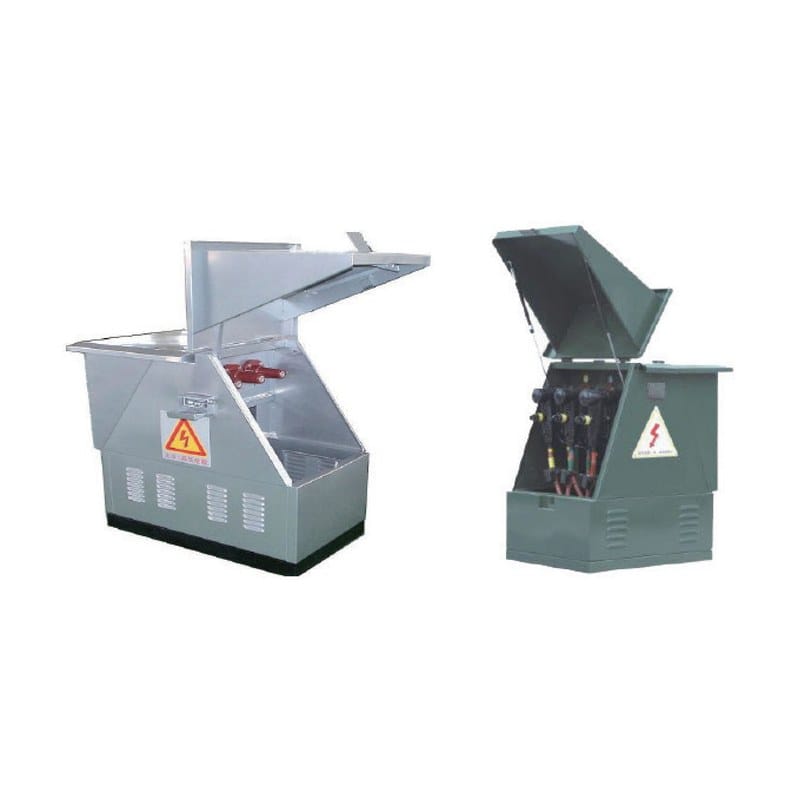
A Cable Branch Box may look like a relatively simple part of a power distribution network, but selecting the right configuration requires more than deciding how many cables need to enter and leave the enclosure. The box becomes a physical and electrical branching point where feeder routes are divided, cables are terminated, circuits may be switched or protected, and future changes to the distribution network often need to be accommodated.
A poor selection may not create an immediate operating problem. Difficulties often appear later when cable terminations become crowded, feeder identification is unclear, environmental sealing is compromised during modification, or an additional circuit cannot be integrated without substantial rework. These issues are usually easier to prevent during system planning than to solve after installation.
This Cable Branch Box Selection Guide uses seven practical questions to help evaluate voltage, feeder arrangement, switching and protection, cable interfaces, installation environment, maintenance access, and future development. The objective is to select a branch box that fits the distribution route as a complete system rather than simply choosing an enclosure with enough connection points.
1. What Role Will the Cable Branch Box Perform?
The first question should be about function rather than dimensions. Before selecting a Cable Branch Box, determine exactly why the distribution network needs a branch point at that location.
In a typical electrical distribution network, power travels along defined feeder routes before being divided toward transformers, distribution equipment, buildings, process areas, or other downstream loads. The broader concept of electric power distribution helps explain why these branch points matter: the distribution system must move electrical energy from higher-level network sections toward individual load areas through an organized sequence of feeders and distribution nodes.
A Cable Branch Box can provide a controlled location where one incoming cable route is divided into several outgoing paths. In other projects, the equipment may also support sectionalizing, switching, fuse protection, or other functions. These differences significantly affect the required internal arrangement.
If the box only needs to provide cable branching, a relatively straightforward configuration may be sufficient. If operators need to isolate a feeder or if the branch point also forms part of the protection strategy, additional switching or protective equipment may be required.
This is why the project single-line diagram should come before product selection. The diagram should clearly show where power arrives, where it branches, what each outgoing feeder supplies, and what electrical function is expected at the node.
2. What Voltage, Current, and Fault Conditions Must It Handle?
Once the function is clear, the electrical ratings need to be established. Rated voltage is the obvious starting point, but it is not enough to describe whether a Cable Branch Box is suitable for a particular distribution network.
Rated current should reflect the current expected to pass through each relevant path, while insulation requirements need to correspond with the electrical system. Short-circuit conditions also deserve attention because the current flowing during a fault can be much higher than the normal operating current.
These parameters are connected. A branch box can have adequate normal-current capacity while still being poorly matched to the system if its internal connections, switching devices, cable interfaces, or other components are not appropriate for the available fault level.
The upstream network therefore needs to be understood. Transformer characteristics, cable impedance, feeder length, and the wider distribution arrangement can influence short-circuit conditions at the branch point.
It is also important to consider whether the operating arrangement can change. A feeder that normally carries a moderate load may experience different current conditions after network reconfiguration or future expansion. Selecting equipment only around today’s most common operating state can leave little flexibility when the distribution system develops.
The practical objective is to match the Cable Branch Box to both normal operation and credible abnormal conditions rather than relying on one headline electrical rating.
3. How Many Incoming and Outgoing Cable Routes Are Actually Needed?
Feeder quantity has a direct influence on the branch box configuration, but simply counting cables can be misleading.
Project teams should first map the distribution route and identify where power enters, where it continues, where it branches, and where it terminates. This provides a much clearer picture than starting with a standard enclosure and trying to assign available connection positions afterward.
Suppose an installation requires one incoming route and several outgoing feeders. It is useful to understand whether each outgoing feeder supplies a similar type of load or whether some circuits perform very different functions. A transformer feeder, another branch node, and a continuation of the main cable route may require different operating or protection considerations even though they all appear as outgoing cables on the drawing.
Future routes should also be considered carefully. If an additional feeder is already expected as part of an approved development plan, reserving an appropriate connection position during the original design can reduce later modification. If expansion is only a vague possibility, however, adding excessive unused connection capacity may create unnecessary complexity.
A strong cable distribution plan therefore distinguishes between current feeders, probable future feeders, and undefined possibilities.
The site’s Kablo Dağıtım Çözümleri page follows the same route-based logic by treating route mapping, branch-point selection, protection interfaces, and cable connections as connected design decisions rather than isolated product choices.
4. Does the Branch Point Need Switching or Protection?
Not every cable branch point needs the same electrical functions.
Some Cable Branch Box installations mainly provide an organized connection point between incoming and outgoing cable routes. In other applications, operators may need the ability to switch a feeder, isolate part of the network, or provide protection for a downstream circuit.
The key question is what should happen during normal operation, planned maintenance, and an electrical fault.
If a downstream cable or connected section needs to be isolated without unnecessarily disturbing other routes, switching capability can become useful. If the branch point contributes to transformer or feeder protection, the required protective arrangement needs to be coordinated with upstream and downstream devices.
This means switching and protection should not be added simply because they are available options. Every function should solve a defined system requirement.
A load-switch arrangement, for example, changes the role of the branch box from a passive connection point to an operating node. Adding fuse protection introduces another relationship with the downstream equipment and the wider protection hierarchy. These functions influence internal space, operating procedures, cable arrangement, and maintenance requirements.
Before deciding on the configuration, engineers should therefore describe the intended operating sequence. Who needs to isolate the circuit? Under what condition should a protective element operate? Which parts of the network should remain energized when one feeder is removed from service?
Once those questions are answered, the required branch-box functionality becomes much clearer.
5. Do the Cable Interfaces Match the Actual Cables?
Cable termination is one of the most important parts of Cable Branch Box selection because a branch point exists primarily to organize cable connections.
The design should account for the actual conductor and cable system rather than representing each feeder as a simple line on the electrical drawing. Real cables require space for entry, bending, support, termination, phase identification, stress control where applicable, and future inspection.
Cable dimensions therefore affect more than terminal selection. They influence enclosure depth, compartment layout, entry position, spacing between connectors, and the amount of working room available to installers.
Entry direction should be confirmed early as well. A project using bottom-entry cables requires coordination between the equipment base, cable trench, foundation opening, and internal termination arrangement. If civil works and equipment layout are developed independently, cable routes may not align with the finished branch box.
The type of cable connection also matters. Different termination systems can require different clearances and installation procedures. Mixing connection methods without planning can make the compartment unnecessarily complicated.
A useful selection process therefore starts with actual cable information: quantity, approximate size, entry direction, termination method, feeder identification, and likely future routes. The branch box is then configured around those physical requirements.
6. What Environmental Conditions Will the Branch Box Face?
A Cable Branch Box often operates at a distribution node where environmental conditions can be more demanding than those inside a controlled electrical room. For that reason, enclosure selection should be based on the real installation environment rather than a generic indoor or outdoor label.
Moisture, condensation, airborne dust, temperature variation, contamination, solar heating, and local installation conditions can all affect long-term equipment performance. Cable entry points can be particularly important because they create interfaces between the protected enclosure and the external cable system.
Environmental protection should therefore be treated as a complete enclosure strategy. Door seals, cable openings, joints, ventilation where required, internal moisture control, equipment base, and installation workmanship all contribute to the final result.
A common mistake is assuming that a highly sealed enclosure automatically provides the best solution. Electrical connections and switching components can generate heat, so thermal behavior must also be considered. Environmental protection and heat management need to work together.
Condensation deserves separate attention because it can develop without obvious external water entry. Temperature changes can allow moisture to form on internal surfaces even when the enclosure appears properly sealed. The actual site conditions should therefore be understood before equipment construction is finalized.
Selecting the enclosure around real environmental stresses improves both reliability and the usefulness of future maintenance inspections.
7. Can the Cable Branch Box Be Maintained and Expanded Easily?

The final selection question concerns the equipment after commissioning.
A Cable Branch Box may remain unchanged for long periods, but technicians still need to identify feeders, inspect cable connections, operate switching devices where fitted, check enclosure condition, and investigate abnormal events. The layout should make these activities practical rather than forcing personnel to disturb unrelated circuits.
Feeder identification is particularly important. Incoming, continuing, and branch routes should remain clear from both the physical equipment and the project documentation. If network changes are made later, labels and drawings should be updated so the installed configuration remains understandable.
Future expansion should also be treated realistically. A spare connection position is useful only if the electrical network and physical installation can actually support an additional feeder. Cable routing, enclosure space, upstream capacity, protection coordination, and site conditions may all affect whether expansion is practical.
This distinction between physical spare space and usable system capacity is important. An enclosure can contain an unused position while the network itself has little meaningful expansion margin.
A good branch box therefore supports today’s feeder arrangement while remaining understandable and serviceable when the network changes. Long-term maintainability is not an extra feature; it is part of correct equipment selection.
Cable Branch Box Selection Checklist
The following table provides a practical review before a Cable Branch Box configuration is finalized.
| Selection Area | What to Confirm | Neden Önemli |
|---|---|---|
| Network role | Branching, continuation, switching or protection | Defines the basic equipment function |
| Voltage | Actual system voltage and insulation requirements | Establishes electrical compatibility |
| Nominal akım | Current through incoming and outgoing paths | Supports normal network operation |
| Fault conditions | Available short-circuit conditions | Influences equipment and protection requirements |
| Feeder quantity | Current and probable future cable routes | Determines connection arrangement |
| Cable interface | Cable size, entry direction and termination type | Prevents installation conflicts |
| Switching | Need for feeder isolation or sectionalizing | Defines operating capability |
| Protection | Fuse or other protection requirements | Connects the branch point to the protection strategy |
| Environment | Moisture, dust, temperature and contamination | Influences enclosure construction |
| Maintenance | Access, identification and inspection | Supports long-term serviceability |
| Expansion | Realistic future feeders and route development | Reduces avoidable reconstruction |
This table should not be treated as eleven independent checks. A change in one area often affects several others. Adding a switching function may change enclosure space and operating access, while adding another feeder can influence cable routing and termination layout.
The most reliable configuration therefore comes from reviewing the complete branch node as one system.
Passive Branching or a Cable Branch Box with Switching?
One important decision is whether the branch point needs only connection capability or whether it should also provide switching.
A basic branching configuration can be appropriate when the electrical network only needs an organized point for dividing cable routes and the required isolation can be performed elsewhere in the system. Simpler functionality can keep the operating logic clear when there is no reason to add local switching.
A branch box with switching capability becomes more useful when the distribution route needs local sectionalizing or when a particular outgoing path should be isolated at the branch node. The added function can improve operational flexibility, but it also changes maintenance, interlocking, operating procedures, and internal equipment requirements.
Protection can introduce another level of functionality. When a branch box includes switching and fuse coordination, the project team needs to understand exactly which downstream equipment is being protected and how that arrangement interacts with upstream protective devices.
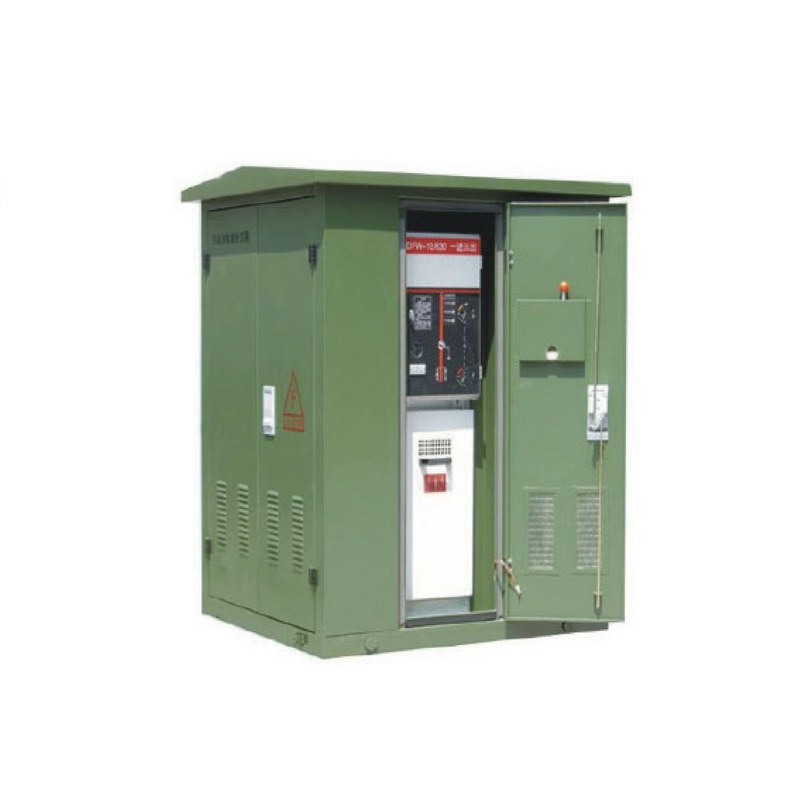
The site’s Cable Branch Box product category provides different configurations for cable branching and switching applications, which makes the functional requirement an important first step before choosing a specific product structure.
The practical rule is simple: select only the switching and protection functions that the network actually needs, but make sure the branch point can perform those functions clearly when they are required.
How Cable Route Mapping Improves Selection
Many branch-box problems begin because the equipment is selected before the cable network has been mapped clearly.
A route map should identify the upstream source, the path of the main feeder, each branching location, downstream transformers or distribution nodes, and any route expected to continue beyond the branch point. This makes it easier to understand why each cable enters or leaves the enclosure.
Mapping can also reveal when one branch box is being asked to perform too many unrelated functions. If several cable routes cross a location only because it is physically convenient, the resulting branch arrangement may become difficult to identify and maintain.
The better approach is to place branch points where they support the electrical network logically. Physical convenience still matters, but electrical clarity should remain part of the decision.
Route mapping also helps with future expansion. If a likely new load area is already known, designers can see whether the current branch node is an appropriate place to create the future feeder or whether another location would produce a cleaner network.
This type of planning often reduces later cable rework because branch-box selection follows the distribution path instead of being treated as a standalone equipment decision.
How Protection Coordination Affects the Branch Box
A Cable Branch Box containing switching or protective equipment becomes part of the wider protection hierarchy.
When a downstream fault occurs, the objective is generally to isolate the affected section in a controlled way while avoiding unnecessary interruption elsewhere where the system design allows. Achieving that result requires coordination between devices at different points in the distribution network.
The branch box cannot therefore be evaluated independently from upstream switchgear, transformer protection, ring-network equipment, and downstream devices.
A protective function that appears suitable when viewed on its own may behave differently after it is combined with the rest of the system. Fault-current magnitude, device operating characteristics, cable conditions, and transformer characteristics can all influence coordination.
This is particularly important when project configurations change. If the upstream transformer or network arrangement is modified, the available fault current at the branch point may change as well. Protection assumptions should then be reviewed rather than automatically carried forward from the original design.
Good equipment selection therefore includes not only the physical presence of protection but also an understanding of how that protection is intended to behave within the complete system.
Why Compact Size Should Not Be the Only Goal
Cable Branch Boxes are often valued for providing an organized distribution node without requiring a large electrical installation. Compactness can be a genuine advantage, especially where installation space is limited.
However, the smallest possible enclosure is not always the most practical solution.
Cable bending and termination require physical room. Switching devices need operating clearance. Technicians need enough access to inspect connections and identify feeders. Additional environmental protection or monitoring components may also require internal space.
An enclosure that is too compact can therefore make installation more difficult even if every component technically fits.
The better objective is efficient space utilization. This means using only as much enclosure volume as necessary while preserving clear cable routing, suitable electrical separation, thermal performance, inspection access, and future serviceability.
Physical dimensions should therefore be confirmed after the cable and functional layout is understood. When enclosure size becomes the first design constraint, the electrical system may be forced into a less practical arrangement.
Common Cable Branch Box Selection Mistakes
One common mistake is selecting a Cable Branch Box primarily from feeder quantity. Two branch points with the same number of cables may need very different equipment because their voltage, current, cable dimensions, environmental conditions, or switching functions differ.
Another mistake is treating all outgoing feeders as equivalent. A continuation of the main network route and a transformer feeder may have different protection and operating requirements even though both are physically outgoing cables.
Cable-entry planning is also frequently underestimated. The enclosure may fit perfectly in the intended location while the cable trench, conductor bending space, or termination arrangement does not align with the finished equipment.
Environmental conditions create another source of mistakes. Specifying an enclosure as simply “outdoor” does not describe condensation, contamination, temperature variation, or the way cable-entry modifications may affect sealing.
Finally, some projects leave several spare connection points without confirming whether the electrical system or cable route can realistically support future feeders. Expansion planning should be based on probable network development rather than empty positions alone.
These mistakes share one common cause: the product is being selected before the branch point is fully understood.
What Information Should Be Prepared Before Selection?
A useful Cable Branch Box specification begins with project information rather than a model number.
The single-line diagram should identify the branch point and show the relationship between incoming and outgoing feeders. Cable information should describe quantity, entry direction, approximate size, and termination requirements. System voltage, rated current, and relevant fault conditions should also be available.
The project should explain whether local switching is needed and whether the branch box contributes to protection. If switching or protective functions are required, their relationship with upstream and downstream devices should be defined.
Environmental information should cover the actual installation conditions, while the site layout should show the relationship between the enclosure, foundation, cable trench, and required working space.
Finally, expected future feeders should be separated from speculative expansion. This prevents the current design from becoming unnecessarily complex while still reserving practical capacity where future development is genuinely expected.
Complete project information makes it much easier to choose a branch box that fits the electrical network instead of relying on assumptions that may only become visible during installation.
A Three-Layer Cable Branch Box Selection Method
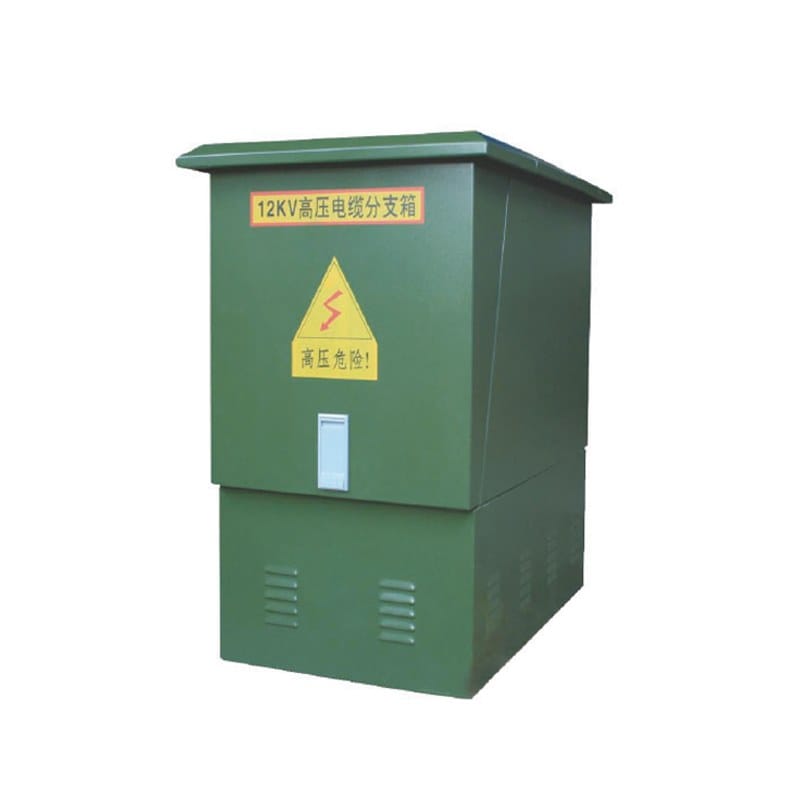
A practical way to simplify selection is to evaluate the branch box in three layers.
The first layer is electrical suitability. Confirm system voltage, rated current, feeder arrangement, short-circuit conditions, switching requirements, and protection functions. This determines whether the equipment can perform its intended electrical role.
The second layer is physical suitability. Review cable size, termination type, entry direction, enclosure dimensions, environmental protection, foundation arrangement, and maintenance access. This confirms that the proposed electrical design can actually be installed properly.
The third layer is lifecycle suitability. Consider circuit identification, inspection, documentation, future feeders, operating procedures, and how easily the branch point can be understood after network modifications.
A suitable Cable Branch Box should perform well in all three areas. Strong electrical ratings do not compensate for poor cable access, and a well-built enclosure does not compensate for a configuration that fails to match the actual distribution route.
This three-layer method keeps product selection connected to the system throughout the project.
Sonuç
A useful Cable Branch Box Selection Guide should begin with the electrical network rather than the enclosure. The correct branch box is determined by what the node must do, where power enters and leaves, what electrical conditions exist at that location, and how the equipment needs to operate throughout its service life.
Seven questions provide a practical framework: define the role of the branch point, confirm voltage and current conditions, map the feeder routes, determine whether switching or protection is required, verify cable interfaces, evaluate the installation environment, and plan for maintenance and realistic expansion.
These factors should be considered together. Adding an outgoing feeder can change cable space, while adding switching can change the operating strategy and enclosure arrangement. Environmental protection can affect thermal behavior, and future expansion may influence both physical and electrical capacity.
The best Cable Branch Box is therefore not simply the one with enough terminals. It is the configuration that fits the distribution route, supports clear cable connections, provides the required electrical functions, remains practical to inspect, and can accommodate realistic network development without unnecessary complexity.
SSS
What is the main purpose of a Cable Branch Box?
A Cable Branch Box creates an organized point for dividing or continuing cable feeders within a distribution network. Depending on the configuration, it may also provide switching, sectionalizing, or protection functions while keeping cable connections accessible and clearly arranged.
How do I choose the right Cable Branch Box?
Start with system voltage, rated current, feeder quantity, short-circuit conditions, cable size, termination method, switching needs, protection requirements, installation environment, and expected future routes. The configuration should follow the network diagram rather than enclosure size alone.
Does every Cable Branch Box need a load switch?
No. A load switch is useful when the branch point needs local switching or sectionalizing, but a basic cable-branching node may not require that function. The decision should reflect the operating strategy and coordination of the wider distribution system.
Why is cable termination space important in a Cable Branch Box?
Medium-voltage cables require room for entry, bending, support, termination, identification, and inspection. An enclosure can contain enough connection positions but still be difficult to install if the actual cable dimensions and termination routes were not considered during selection.
How should future expansion be planned in a Cable Branch Box?
Reserve future feeder positions only when network development is realistically expected. Expansion must consider more than physical space; upstream capacity, cable routes, protection, electrical ratings, environmental conditions, and available termination areas must also support the additional circuit.
Need Help Choosing the Right Cable Branch Box?
If you’re unsure which Cable Branch Box configuration best matches your feeder routes, voltage level, cable interfaces, switching requirements, installation environment, or future expansion plan, our technical team can help evaluate the branch point within the complete distribution system. Share your single-line diagram and cable requirements to develop a practical configuration for long-term operation.