Índice
Introdução

Choosing between High Voltage vs Low Voltage Power Cable is not simply a matter of comparing two voltage ratings. The cable becomes part of the complete electrical distribution path, and its voltage class affects insulation design, conductor selection, cable construction, termination method, installation requirements, testing procedures, fault behavior, and the type of equipment connected at each end.
This distinction becomes particularly important in projects that contain several distribution levels. Higher-voltage cables may move electrical power between major distribution points, while low-voltage cables carry power from downstream switchgear or distribution cabinets toward individual equipment, lighting, auxiliary systems, and local loads. Both can exist within the same project, but they solve different electrical problems.
A useful High Voltage vs Low Voltage Power Cable comparison therefore needs to look beyond the labels printed on the cable. The correct choice depends on the position of the cable within the network, required current capacity, transmission distance, insulation requirements, installation environment, cable routing, termination equipment, protection strategy, and long-term maintenance plan. The eight differences below explain how these factors affect practical cable selection.
What Is the Basic Difference Between High and Low Voltage Power Cable?
The fundamental difference is the voltage level for which the cable system is designed. A power cable contains one or more electrical conductors surrounded by insulation and protective construction appropriate to its intended operating environment. The broader concept of a power cable includes cables used to transmit electrical energy between sources, distribution equipment, and loads.
Low Voltage Power Cable is generally associated with downstream electrical distribution. It may connect low-voltage switchgear to distribution cabinets, supply machinery and building systems, or provide outgoing circuits for lighting, ventilation, auxiliary equipment, and other loads.
High Voltage Power Cable operates at a higher distribution level and requires a more sophisticated insulation system because the electrical stress across the insulation is greater. Depending on the network, it may connect substations, transformers, switchgear, cable branch points, or other major distribution nodes.
The practical difference is therefore not only voltage. Higher-voltage operation changes how the cable must control electrical stress, how it is terminated, how it is tested, and how it integrates with surrounding equipment.
Difference 1: Their Position in the Power Distribution System
One of the clearest differences between High Voltage vs Low Voltage Power Cable is where each type normally sits within the electrical distribution hierarchy.
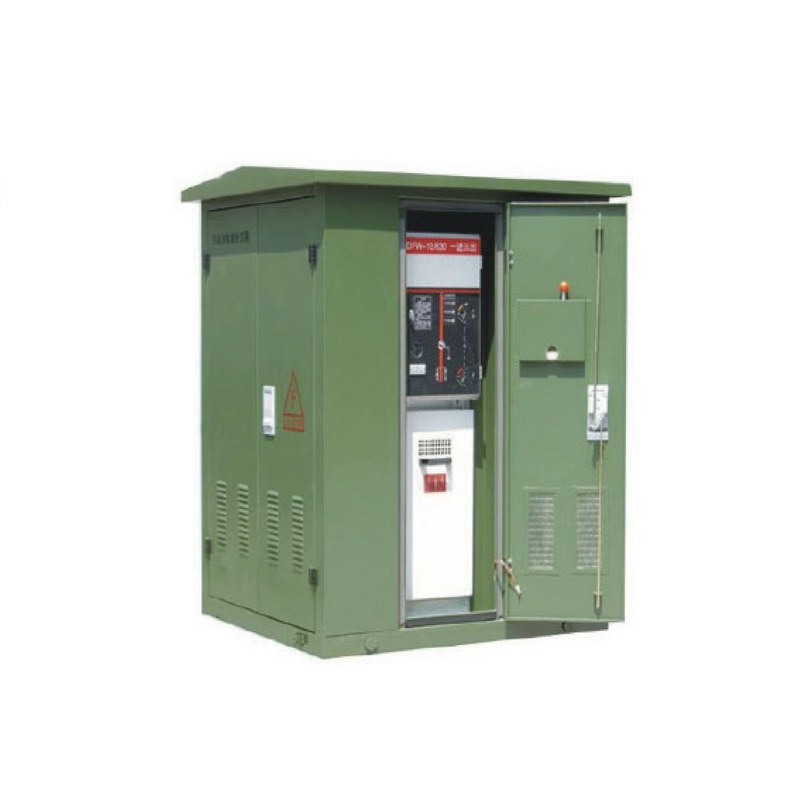
High-voltage cable is generally positioned closer to the higher-energy side of the network. It can carry power between major receiving points, substations, transformer locations, medium- or high-voltage switching equipment, and large distribution nodes. At this level, reducing current for a given amount of transferred power can make higher-voltage distribution practical over longer routes or for larger loads.
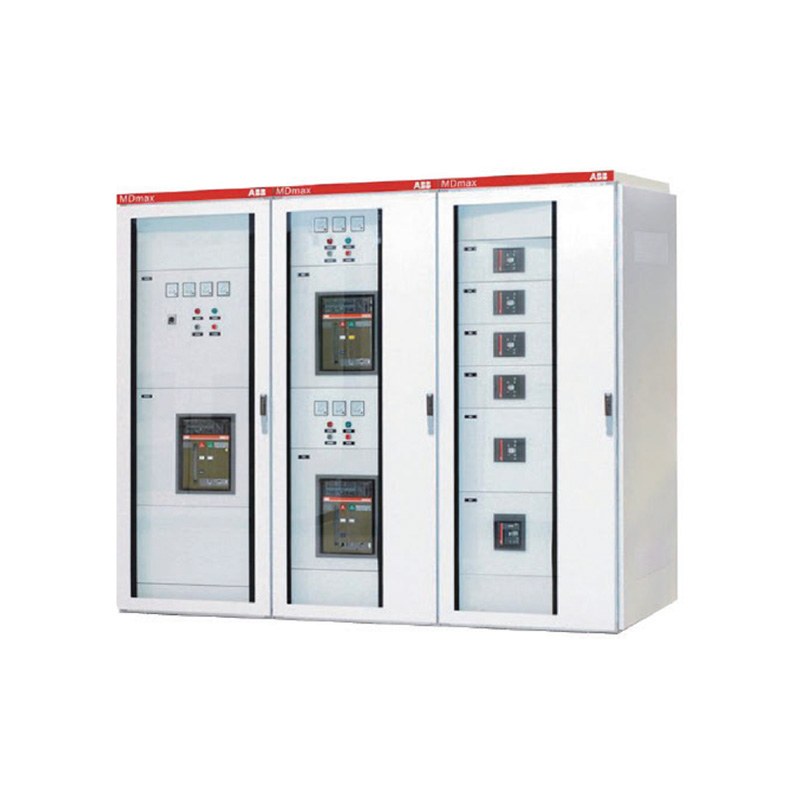
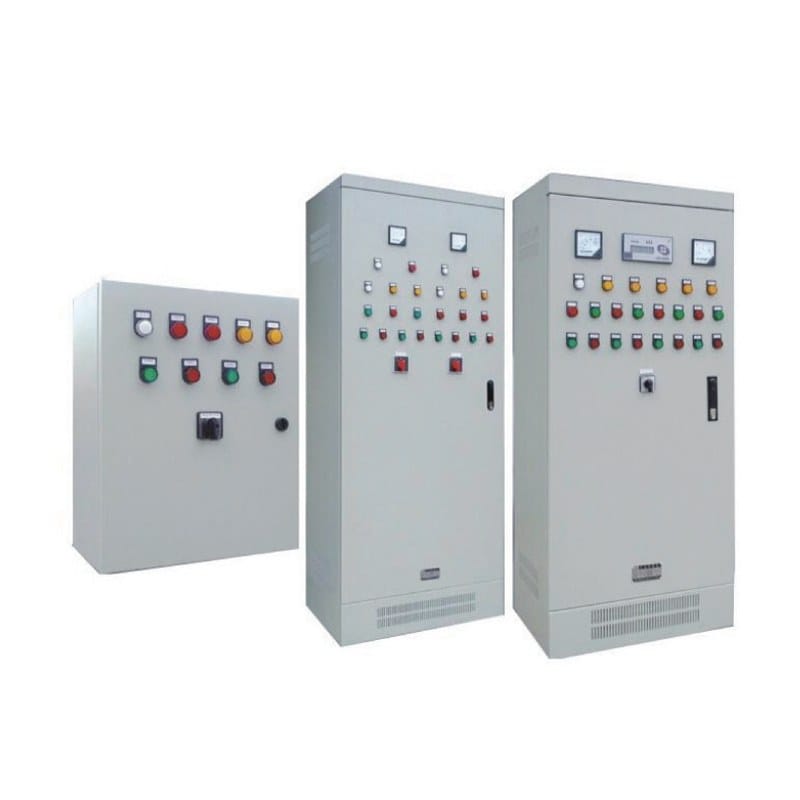
Low-voltage cable usually appears after voltage transformation and downstream distribution. Once the required voltage has been reduced, low-voltage cables distribute electrical power from switchgear, distribution cabinets, or distribution boxes toward individual loads and localized systems.
A single project can therefore use both types in sequence. A higher-voltage feeder may bring power to a transformer or major distribution point, while low-voltage outgoing cables carry the transformed power toward downstream equipment.
This is why cable selection should begin with the single-line diagram. The cable type needs to match its actual position within the distribution network rather than being selected as an isolated product.
Difference 2: Insulation Structure and Electrical Stress
Voltage level has a major influence on cable insulation.
In a low-voltage system, the insulation must safely separate energized conductors from one another and from surrounding conductive materials while tolerating the environmental and mechanical conditions of the installation.
As voltage increases, electrical stress within and around the insulation becomes more significant. High-voltage cable construction therefore requires greater attention to insulation thickness, electric-field control, shielding or screening arrangements, conductor interfaces, and the quality of the cable termination system.
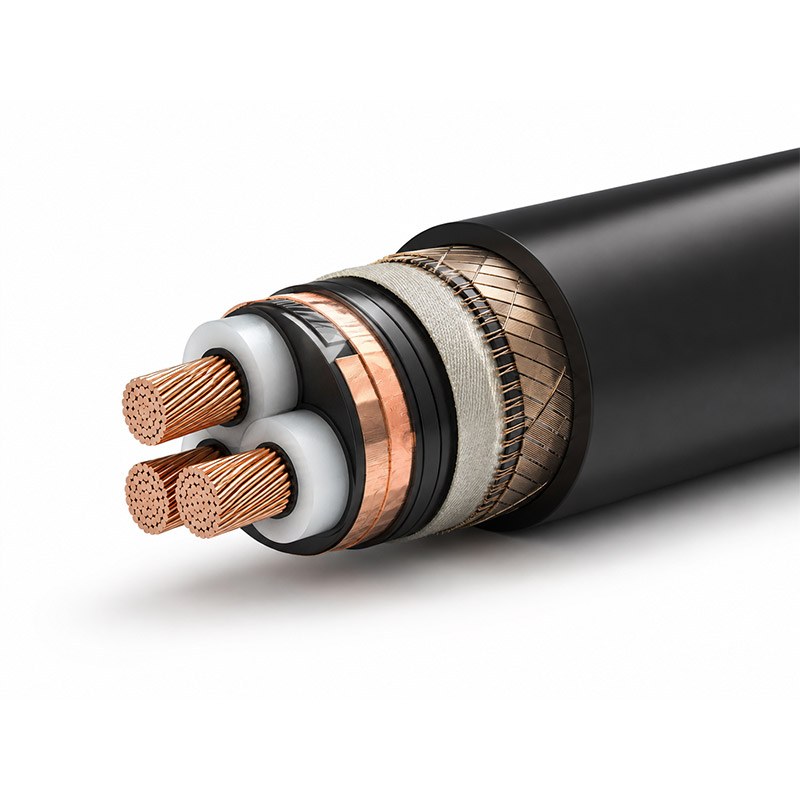
This difference explains why a higher-voltage cable is not simply a low-voltage cable with thicker insulation. The entire insulation system needs to work together. Conductor screens, insulation screens, metallic shielding, outer protection, and termination accessories may all play roles in controlling the electrical field and maintaining stable operation.
The quality of installation also becomes increasingly important as voltage rises. An insulation system can perform well when manufactured correctly but become vulnerable if cable preparation or termination work damages critical layers.
When comparing High Voltage vs Low Voltage Power Cable, insulation should therefore be viewed as a complete engineered system rather than a single material surrounding the conductor.
Difference 3: Cable Construction Is More Complex at Higher Voltage
Low Voltage Power Cable construction can vary considerably depending on the application, but its architecture is generally more straightforward than that of cables intended for higher-voltage distribution.
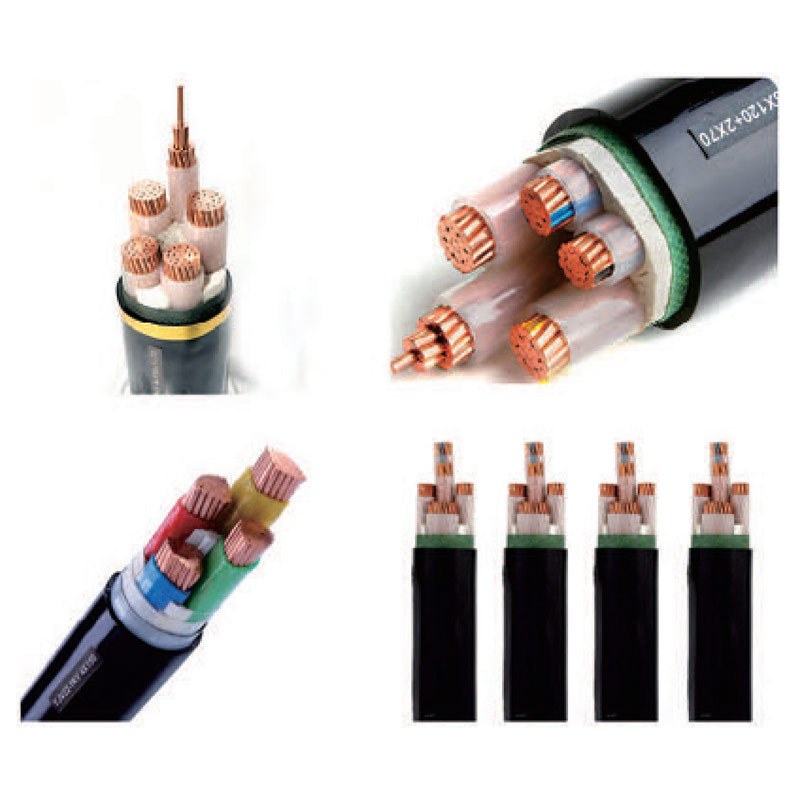
A typical low-voltage cable may contain copper or aluminum conductors, conductor insulation, fillers or bedding depending on the construction, mechanical protection where required, and an outer sheath. Armoring may be included when the installation requires additional mechanical protection.
High-voltage cable often needs additional functional layers because electrical-field control becomes more important. The conductor, insulation, semiconductive layers, metallic screen, moisture protection, armor where required, and outer sheath must work as one cable system.
This affects product selection because each layer serves a purpose. Mechanical protection should reflect the installation environment, while shielding and insulation structure need to correspond to electrical requirements.
The cable construction also affects overall diameter, weight, minimum bending requirements, termination work, cable supports, and the dimensions of trenches, ducts, or equipment entry points.
For this reason, cable construction should be reviewed before installation pathways are finalized. A route designed only from conductor size may underestimate the actual physical space required by the finished cable.
Difference 4: Current Capacity Depends on More Than Voltage
It is easy to assume that High Voltage Power Cable always carries more current than Low Voltage Power Cable, but voltage class and current-carrying capacity are different design questions.
The current a cable can carry depends on factors such as conductor material, conductor cross-sectional area, insulation system, installation method, ambient conditions, grouping, heat dissipation, and actual load pattern.
Higher voltage allows a given amount of electrical power to be transferred with lower current than would be required at a lower voltage. This is one reason higher-voltage distribution is useful for moving significant amounts of power through a network.
However, cable sizing still needs to be based on the actual electrical system.
A Low Voltage Power Cable supplying a large downstream load may use a substantial conductor cross-section, while a particular higher-voltage feeder can operate at a lower current because it transfers the same power at a higher voltage.
The correct selection therefore requires separate consideration of voltage class and conductor capacity. Voltage determines the insulation and system category, while load current strongly influences conductor sizing and thermal performance.
The site’s Cable product category separates High Voltage Power Cable and Low Voltage Power Cable as distinct project-side options, which reflects this need to match cable type to the actual distribution level.
Difference 5: Terminations and Cable Interfaces Require Different Planning
Cable termination is one of the areas where the practical difference between High Voltage vs Low Voltage Power Cable becomes especially visible.
Low-voltage conductors still require appropriate terminals, conductor preparation, fastening, phase identification, bending space, and connection to breakers, busbars, cabinets, or equipment. Poor termination can increase contact resistance and contribute to localized heating regardless of voltage level.
Higher-voltage cable terminations involve additional insulation and electric-field considerations. The termination needs to transition safely from the cable’s controlled insulation structure to the equipment connection. Cable preparation, stress-control components, shielding interfaces, clearances, and installation quality therefore become more significant.
This affects surrounding equipment design.
A switchgear or cable branch box may have sufficient electrical rating but still create installation difficulties if the cable compartment does not provide enough termination and bending space. The position of cable entries, trench dimensions, support points, and access for installers should be checked before equipment is ordered.
The cable and equipment should therefore be designed as interfaces rather than independent products. A cable route is not complete until the cable can be terminated correctly at both ends.
Difference 6: Installation Routes and Bending Requirements Can Vary Significantly
Cable routing is another major selection factor because the cable has to travel through a real physical environment.
Low Voltage Power Cable may be installed in trays, ducts, trenches, conduits, buildings, machinery areas, or other project-specific routes. Higher-voltage cables may use underground routes, cable trenches, dedicated corridors, or other controlled installation paths depending on the distribution system.
Cable diameter and construction influence bending requirements. Larger cables can require considerably more space at corners, equipment entries, and vertical transitions than electrical drawings initially suggest.
This creates a common design problem. The single-line diagram shows a cable as one narrow line, while the physical installation requires substantial three-dimensional space.
The number of parallel cables can further increase route requirements. When several cables are installed together, spacing and thermal conditions may need to be considered because neighboring cables can influence heat dissipation.
A reliable cable design therefore checks the route before conductor selection is considered complete. Engineers should confirm available tray or trench space, bends, vertical transitions, equipment entry, termination access, mechanical support, and future cable requirements.
This is true for both voltage levels, but higher-voltage cable systems often make route planning especially important because cable dimensions and termination requirements can be more demanding.
Difference 7: Protection and Fault Conditions Affect the Cable Differently
Every power cable needs suitable protection against abnormal electrical conditions, but the surrounding protection system changes according to the distribution level.
Low-voltage outgoing cables are typically coordinated with the protective devices installed in low-voltage switchgear, distribution cabinets, or distribution boxes. The cable conductor needs to match normal load requirements while the protective device needs to respond appropriately to overload and fault conditions.
Higher-voltage cable feeders can form part of a broader protection system involving medium- or high-voltage switchgear, relays, current measurement, transformers, ring-network equipment, and other protective devices.
The cable needs to tolerate the thermal and mechanical effects associated with credible fault conditions until the protection system clears the fault.
Protection coordination therefore matters just as much as conductor capacity. A cable can be adequately sized for normal load but still require review if the prospective fault current or protection clearing behavior changes.
This becomes particularly important after system modifications. Increasing transformer capacity or changing network topology can alter available short-circuit current even when the physical cable route remains unchanged.
Cable selection should therefore be reviewed whenever major upstream system characteristics change.
Difference 8: Testing, Inspection, and Maintenance Requirements Differ
Both High Voltage and Low Voltage Power Cable need appropriate inspection and maintenance, but the methods and level of attention can differ because the insulation systems and operating stresses are different.
Low-voltage cable inspection often focuses on visible mechanical condition, termination integrity, abnormal heating, conductor connections, enclosure entry points, insulation condition where relevant, and evidence of environmental damage.
High-voltage cable systems place additional importance on the condition of terminations, joints, shielding or earthing arrangements, and insulation interfaces. Because these components are critical to controlling electrical stress, deterioration at a joint or termination can be particularly important.
Maintenance should therefore focus on the complete cable circuit rather than only the cable length between two pieces of equipment.
A cable route can remain physically undamaged while problems develop at terminations because of installation quality, mechanical movement, environmental exposure, or repeated thermal cycling.
Records are useful here. Documenting route changes, termination work, abnormal heating, test results where applicable, and modifications can help maintenance teams recognize trends rather than treating every inspection as an isolated event.
High Voltage vs Low Voltage Power Cable Comparison Table
The main differences can be summarized as follows:
| Comparison Factor | Cabo de alimentação de alta tensão | Cabo de alimentação de baixa tensão |
|---|---|---|
| Distribution role | Higher-level power transmission and distribution | Downstream and localized distribution |
| Typical connection | Major switchgear, transformers, substations, distribution nodes | Switchgear, cabinets, boxes and individual loads |
| Insulation system | More complex electrical stress control | Generally simpler insulation structure |
| Cable construction | Often includes additional screening and protective layers | Varies by load and installation requirements |
| Conductor sizing | Based on load, thermal conditions and route | Also based on load, thermal conditions and route |
| Termination | Requires greater attention to insulation and field control | Focuses strongly on secure conductor connection and protection |
| Installation planning | Route, bending, joint and termination space are critical | Route and conductor management remain important |
| Interface proteção | Coordinated with higher-level switchgear and relay systems | Commonly coordinated with low-voltage protective devices |
| Maintenance focus | Cable, joints, screens and terminations | Conductors, terminals, insulation and physical condition |
| Common system position | Upstream distribution levels | Downstream distribution levels |
The table should not be interpreted as meaning one cable type is technically better. Each is designed for a different part of the electrical system.
How Transmission Distance Influences the Decision
Distance does not independently decide whether a project should use High Voltage or Low Voltage Power Cable, but it can strongly influence the overall distribution architecture.
For a given level of transferred power, lower voltage generally requires higher current. Higher current can increase conductor requirements and electrical losses along the route. As distribution distance and power demand increase, engineers may therefore choose to transmit power at a higher voltage and reduce the voltage closer to the load.
This is a system-design decision rather than a cable-selection shortcut.
A project should not simply replace a low-voltage cable with a higher-voltage cable because the route is long. Higher-voltage distribution also requires appropriate switchgear, transformers, protection, insulation, cable terminations, operating procedures, and maintenance capability.
The better approach is to evaluate the complete electrical path. The location of transformers, major loads, distribution points, and cable routes should be considered together to determine where voltage transformation provides the most practical system structure.
Once the distribution voltage level is established, the cable can be selected around the electrical and physical requirements of that route.
How Installation Environment Affects Both Cable Types
Voltage class does not remove the need to consider environmental conditions.
Power cables may operate in cable trenches, conduits, ducts, trays, enclosed rooms, underground routes, equipment areas, or other installation environments. Each condition can influence cable construction and current-carrying performance.
Heat dissipation is particularly important. A cable carrying current produces heat, and the surrounding environment determines how effectively that heat can escape. Cable grouping, confined spaces, soil conditions for buried routes, and nearby heat sources can all influence thermal performance.
Moisture is another consideration. Cable sheath construction, joints, terminations, and route design should reflect the possibility of water exposure or condensation where relevant.
Mechanical conditions also matter. Cables exposed to potential impact or physical damage may require additional protection. Armored constructions or other protective methods can be appropriate where the installation demands them.
The key principle applies to both voltage levels: conductor and insulation selection should be based on the environment the cable will actually experience, not simply its nominal voltage.
Copper or Aluminum Conductors?
Both copper and aluminum can be used as conductor materials in power cable systems, depending on the cable design and project requirements.
Copper offers high electrical conductivity and can achieve a given electrical requirement with a smaller conductor cross-section than aluminum. Aluminum has different physical and electrical characteristics, which affect conductor dimensions, connections, cable weight, and termination requirements.
The important issue for cable selection is not treating the conductor material as an isolated preference. The complete circuit needs to be designed around the chosen conductor.
Terminals and connection equipment should be compatible with the conductor material. Cable size, installation space, bending requirements, mechanical characteristics, and thermal performance should also be considered together.
For both High Voltage and Low Voltage Power Cable, conductor selection should therefore follow the electrical load and installation design rather than being used as a shortcut to determine overall cable suitability.
How Cable Distribution Planning Connects High and Low Voltage Systems
High- and low-voltage cables rarely operate as completely separate networks within a major electrical project. They are usually connected through transformers, switchgear, distribution cabinets, and branch points that create one continuous electrical path.
A higher-voltage cable may bring power to a transformer area. After voltage transformation, low-voltage switchgear organizes the secondary distribution, and Low Voltage Power Cable then delivers power toward downstream cabinets or loads.
The Soluções de distribuição de cabos structure reflects this route-based approach by connecting cable feeders, branch points, distribution equipment, and downstream electrical loads within the same system-planning logic.
This is important because changing one part of the cable system can influence another part of the network. Moving a transformer changes cable route lengths. Adding a major load may alter feeder capacity. Reconfiguring the distribution architecture can change fault levels and protection requirements.
Cable selection therefore works best when high- and low-voltage routes are designed as parts of one distribution system rather than as separate procurement items.
Common High Voltage vs Low Voltage Power Cable Selection Mistakes
One common mistake is selecting a cable primarily from its voltage label. Voltage establishes the insulation class, but conductor size, current demand, fault conditions, installation environment, and route still need separate evaluation.
Another mistake is assuming that higher voltage automatically means a larger conductor. Conductor size is strongly related to load current and thermal conditions, so cable diameter and conductor capacity cannot be inferred from voltage level alone.
Physical route planning is also frequently underestimated. A cable may satisfy electrical requirements but prove difficult to install because bending space, trench dimensions, equipment entries, or termination access were not checked in advance.
Terminations are another area where project teams can focus too heavily on the cable itself. The complete circuit includes joints, connectors, terminals, switchgear interfaces, and other accessories. These interfaces need to match both the electrical and mechanical characteristics of the cable.
Finally, future load growth should not automatically be handled by selecting a dramatically larger cable. Expansion needs should be connected to realistic system development, because upstream transformers, switchgear, protection, and distribution equipment may also need additional capacity.
A Four-Step Power Cable Selection Method
A practical selection process can be organized into four stages.
The first stage is system definition. Confirm the distribution voltage, source, destination, load, route length, network position, and surrounding electrical equipment. This establishes whether the circuit belongs to a higher-voltage or low-voltage part of the system.
The second stage is electrical sizing. Evaluate load current, conductor material, conductor cross-section, voltage performance, short-circuit conditions, and protection coordination. These factors determine whether the cable can carry the expected load and operate correctly under abnormal conditions.
The third stage is installation planning. Confirm cable construction, routing method, environmental exposure, mechanical protection, bending requirements, cable grouping, entry direction, and termination space.
The fourth stage is lifecycle planning. Consider inspection access, joints and terminations, identification, documentation, future load changes, and how easily the cable system can be maintained.
Using all four stages prevents the project from treating High Voltage vs Low Voltage Power Cable as nothing more than a voltage comparison.
Conclusão
High Voltage vs Low Voltage Power Cable represents two different levels of electrical distribution rather than two competing versions of the same product. High-voltage cables are designed for higher electrical stress and are commonly used between major distribution nodes, while low-voltage cables typically carry power from downstream distribution equipment toward localized loads and auxiliary systems.
The differences extend well beyond voltage rating. Insulation structure, cable construction, termination methods, physical dimensions, installation routes, protection interfaces, and maintenance requirements all change as the cable’s role within the electrical system changes.
A reliable selection process should therefore begin with the single-line diagram and the actual power route. Determine where the cable sits in the network, how much load it needs to carry, what fault conditions may occur, how it will be installed, and what equipment will terminate each end. Only then should conductor size and detailed cable construction be finalized.
In many projects, the correct answer is not choosing High Voltage Power Cable or Low Voltage Power Cable for the entire system. Both are used at different distribution levels, connected through transformers, switchgear, and distribution equipment to form one coordinated electrical network.
Perguntas frequentes
What is the main difference between High Voltage and Low Voltage Power Cable?
The main difference is the voltage level and resulting insulation system. High Voltage Power Cable requires greater electrical stress control and is commonly used at higher distribution levels, while Low Voltage Power Cable usually supplies downstream equipment and localized loads.
Is High Voltage Power Cable always larger than Low Voltage Power Cable?
No. Overall cable size depends on voltage class, conductor cross-section, insulation, shielding, armor, and construction. A large-current Low Voltage Power Cable can use a substantial conductor, while a High Voltage Power Cable may carry lower current for the same transferred power.
When should High Voltage Power Cable be used?
High Voltage Power Cable is appropriate when the electrical distribution design requires power to be carried at a higher voltage between major network points. Selection should also consider load, route length, switchgear, transformers, protection, cable termination, and installation conditions.
How do I choose the correct Low Voltage Power Cable size?
Start with load current, conductor material, installation method, ambient and thermal conditions, cable grouping, route requirements, fault conditions, and protective devices. Cable size should be verified as part of the complete electrical circuit rather than from load current alone.
Can High Voltage and Low Voltage Power Cable be used in the same project?
Yes. Many distribution systems use higher-voltage cables upstream of transformers and Low Voltage Power Cable downstream of low-voltage switchgear. The two cable systems perform different roles but operate together as parts of the same electrical distribution network.
Need Help Choosing the Right Power Cable?
If you’re unsure whether your project requires High Voltage or Low Voltage Power Cable, our technical team can help evaluate the distribution level, load requirements, cable route, installation environment, conductor requirements, protection system, and equipment interfaces. A well-matched cable configuration starts with the complete electrical path rather than voltage rating alone.