جدول المحتويات
مقدمة
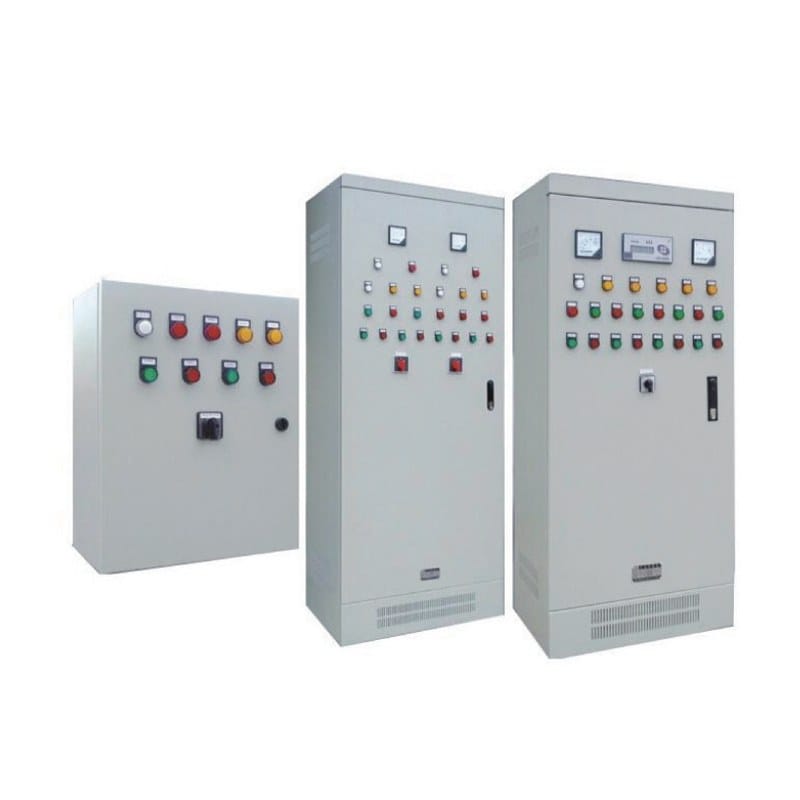
A Dual Power Distribution Box is designed for electrical systems where one power source alone may not provide the level of supply continuity required by the connected loads. Instead of relying on a single incoming circuit, the system monitors two available sources and transfers the load according to a defined operating sequence when the preferred source becomes unavailable or moves outside acceptable operating conditions.
The value of this arrangement is not simply that two power sources are connected to the same enclosure. The real engineering challenge is deciding when a transfer should occur, how the two sources remain electrically separated, how the load behaves during the transition, what happens when normal power returns, and how protection on both sides remains coordinated.
For that reason, choosing a Dual Power Distribution Box should begin with the actual backup-power strategy rather than the size of the enclosure or the number of outgoing circuits. Source characteristics, transfer logic, connected loads, switching arrangement, protection, monitoring, cable layout, maintenance access, and recovery after a power disturbance all need to be considered together.
What Is a Dual Power Distribution Box?
A Dual Power Distribution Box is a distribution enclosure designed to receive two available power sources and supply downstream loads according to a defined switching strategy. Depending on the electrical system, the two sources may be two separate incoming supplies or a normal source combined with a standby source.
At the center of the system is the transfer function. A transfer switch changes a load connection from one source to another, and automatic transfer arrangements can initiate that process when operating conditions indicate that the preferred source is no longer suitable.
The distribution box brings that transfer function together with the incoming circuits, outgoing circuits, protective devices, monitoring components, control logic, neutral and grounding arrangements, and enclosure required for the project.
This makes it more than a switching device. It becomes the point where backup-power logic and downstream electrical distribution meet.
The site’s SXL Series Dual Power Distribution Box is an actual product built around automatic transfer between two sources and supports three-phase three-wire and three-phase four-wire dual-supply arrangements.
Why Backup Power Needs More Than a Second Source
A common misunderstanding is that backup power simply means connecting another source and switching to it when the main supply disappears. In practice, the process requires much more control.
The electrical system first needs to identify whether the normal source is actually unsuitable. A short voltage disturbance should not necessarily be treated in exactly the same way as a complete source failure. The control system may therefore evaluate voltage conditions and apply a defined delay before initiating a transfer.
The standby source must also be available before it can carry the load. If that source has its own fault or abnormal voltage condition, transferring the load to it would not solve the original problem.
After the alternative source becomes available, the switching arrangement must transfer the downstream circuits without incorrectly connecting two sources together in a configuration that is not designed for parallel operation.
When normal power returns, another decision is required. Immediate transfer back may not always be desirable if the returning source has not yet stabilized. A controlled recovery sequence can reduce unnecessary switching and create a more predictable operating process.
A Dual Power Distribution Box therefore manages a sequence of electrical decisions rather than simply selecting between two wires.
1. Confirm What the Two Power Sources Actually Are
The first design question is the identity and behavior of the two sources.
Two independent incoming supplies can have different characteristics from a normal supply paired with a standby generator. Their voltage behavior, availability, starting sequence, synchronization requirements, and expected restoration times can differ.
The transfer logic should therefore be developed around the actual source arrangement.
If both sources are normally available, the controller may simply need to determine which source should have priority and when transfer is permitted. If the standby source needs time to become available after the normal supply fails, the sequence needs to accommodate that delay before the downstream load is transferred.
Source capacity also matters. A standby source should not be assumed to support every circuit simply because it can be connected to the distribution box. The project needs to determine whether the alternative source supports the entire downstream load or only selected priority circuits.
This is especially important when the backup source has less available capacity than the normal source. Load prioritization may then need to become part of the distribution design.
The correct Dual Power Distribution Box therefore starts with a clear definition of both sources and the load each one is expected to support.
2. Decide Which Loads Actually Require Backup Power
Not every electrical circuit necessarily needs to remain supplied during a source interruption.
A more effective design begins by separating loads according to operational importance. Some circuits may need to continue operating, while others can remain disconnected until the normal source returns.
This distinction has an important effect on distribution-box sizing and circuit arrangement.
If every downstream load is placed on the backup system, the alternate source, transfer equipment, incoming conductors, busbars, and outgoing circuits all need to support that complete demand. If only priority loads require backup, the system can be organized around a more clearly defined emergency or continuity requirement.
Load behavior should also be considered. Motors and other equipment with substantial starting demand may place a different requirement on the standby source than their steady operating current suggests. Several loads restarting simultaneously after transfer can create a very different demand profile from normal operation.
A useful design therefore considers not only which loads are important, but how those loads behave immediately after the source changes.
This prevents the backup system from being sized around normal operating current while overlooking the more demanding conditions that occur during restoration.
3. Understand How Automatic Transfer Logic Works
Automatic transfer is one of the defining functions of many Dual Power Distribution Box configurations.
The controller monitors relevant electrical conditions and determines whether the normal source remains suitable. When the defined failure criteria are met, the system initiates a transfer according to its programmed operating sequence.
The SXL Series product currently shown on dfdl.cc includes automatic monitoring of both supply voltages, transfer control, display, and alarm functions. The product page states that its controller evaluates source voltage conditions and uses an adjustable delay before issuing the relevant switching command.
The delay is important because electrical systems can experience brief disturbances. A transfer strategy that reacts to every short fluctuation can cause unnecessary switching, while one that waits too long may leave important loads without supply longer than the project can tolerate.
Return logic deserves the same attention. Once the preferred source becomes normal again, the system needs a defined method for deciding when to transfer back.
The correct timing depends on the operating requirements of the project rather than one universal setting.
This is why automatic transfer should be treated as a control strategy, not merely a product feature.
4. Prevent Incorrect Connection Between Two Sources
Source separation is one of the most important electrical principles in a dual-power system.
If the system is not specifically designed for source paralleling, the switching arrangement must prevent the two supplies from being connected together incorrectly. The transfer mechanism and interlocking logic therefore need to ensure that switching follows the intended sequence.
This requirement influences both mechanical and electrical design.
The transfer equipment needs to establish defined operating positions, while the control system needs to issue commands in the correct order. Indication should also make it clear which source is supplying the load.
The importance of this function becomes easier to understand when considering maintenance and troubleshooting. Technicians need to know whether a source is connected, isolated, available, or abnormal before working on downstream equipment.
A Dual Power Distribution Box should therefore make source status easy to interpret. Ambiguous indication or an unclear switching arrangement increases the difficulty of operating and maintaining the system.
Good dual-source design is not simply about achieving transfer. It is also about ensuring that every transfer state is electrically clear.
5. Coordinate Protection on Both Incoming Sources
Adding a second source introduces another protection path into the electrical system.
Each incoming supply needs to be considered in relation to conductor capacity, switching equipment, fault conditions, and downstream protective devices. The available fault current may not be identical from both sources, which means the system should not assume that electrical conditions remain unchanged after transfer.
Downstream protection also needs to continue functioning correctly regardless of which source is active.
This becomes particularly important where the backup source has different electrical characteristics from the normal source. Protection that coordinates well under one source condition should be reviewed under the alternative operating condition as well.
The incoming devices, transfer mechanism, internal bus or distribution arrangement, outgoing breakers, and conductors therefore form one protection system.
Selecting each device individually without considering both operating states can leave gaps in the protection strategy.
A useful engineering review asks two questions: what fault conditions are possible while the normal source supplies the load, and what changes when the backup source is supplying it?
Both answers should be understood before the configuration is finalized.
6. Evaluate Transfer Time Against the Connected Loads
Different loads respond differently to power interruption.
Some equipment can tolerate a brief loss of supply and restart normally after the alternative source becomes available. Other systems may have control processes, stored data, operating sequences, or mechanical conditions that make interruption more significant.
A Dual Power Distribution Box does not automatically provide completely uninterrupted power simply because switching is automatic. There can still be a transition interval depending on source availability, control logic, transfer equipment, and the overall backup-power architecture.
This distinction should be understood early in the project.
If a load cannot tolerate even a short interruption, an automatic transfer system alone may not satisfy the full continuity requirement. Additional system design may be necessary to bridge the transition.
For loads that can tolerate a controlled interruption, the important task is defining an acceptable transfer sequence and preventing unnecessary delays.
Project teams should therefore classify downstream loads according to their tolerance for interruption rather than treating every circuit identically.
That analysis produces a more realistic backup-power strategy and prevents the phrase “automatic transfer” from being mistaken for “zero interruption.”
7. Plan Cable Entry and Internal Layout for Two Sources
Two incoming power sources generally mean additional conductors, terminals, switching equipment, control wiring, and source identification compared with a conventional single-source distribution box.
The physical layout therefore requires careful planning.
Incoming cables should follow clear routes so technicians can distinguish Source A from Source B without tracing an unnecessarily complicated path through the enclosure. Cable entry direction, conductor dimensions, bending space, terminal positions, and separation from outgoing circuits should all be established before the final enclosure size is selected.
Control wiring needs the same level of organization. Voltage sensing, transfer commands, indications, alarms, and auxiliary functions should remain clearly identifiable from the main current-carrying conductors.
The enclosure should also provide enough working space around the transfer equipment for installation, inspection, and future maintenance.
Trying to minimize enclosure size too aggressively can create a system in which every component fits but the internal wiring becomes difficult to follow. That may save space at installation while creating additional maintenance difficulty later.
The site’s broader Power Distribution Box product range includes lighting, dual-power, and outdoor configurations, illustrating why enclosure and circuit structure need to follow the specific electrical function rather than one standard box arrangement.
8. Make Source Status Easy to Monitor

A dual-power system becomes much easier to operate when personnel can quickly identify the status of each source.
At a minimum, operators may need to know whether the normal source is available, whether the standby source is available, which source is currently connected, and whether the system has detected an abnormal condition.
Display and alarm functions can make this information easier to interpret without opening the enclosure or tracing circuits manually.
Monitoring becomes particularly important after an automatic transfer. The fact that downstream loads remain energized does not necessarily mean the complete system has returned to normal. Operators may still need to know that the primary source failed and the system is currently running from the alternative supply.
A clear alarm can therefore support maintenance response even when no immediate interruption is visible to the downstream user.
Historical information can also be useful where the wider monitoring system supports it. Repeated source disturbances may indicate a larger upstream issue that deserves investigation rather than being treated as isolated transfer events.
The purpose of monitoring is not to add more displays. It is to make the actual operating state easier to understand.
Dual Power Distribution Box Selection Checklist
A practical project review can be organized around the following factors.
| Selection Area | What to Confirm | أهميته |
|---|---|---|
| Source arrangement | Two incoming supplies and their operating characteristics | Defines the transfer strategy |
| Priority source | Which supply normally carries the load | Establishes normal operating logic |
| Backup loads | Circuits that must remain supplied | Determines real backup demand |
| Load behavior | Continuous, starting and restart characteristics | Influences source and switching requirements |
| Transfer logic | Failure detection, delay and return sequence | Prevents unnecessary or unstable switching |
| Protection | Incoming and outgoing protective coordination | Supports operation under either source |
| Cable arrangement | Two incoming routes and downstream conductors | Determines enclosure and termination space |
| Monitoring | Source status, alarms and indication | Makes abnormal operation easier to identify |
| Maintenance | Isolation, access and clear labeling | Supports safe inspection and troubleshooting |
| Future development | Probable additional loads or circuit changes | Helps prevent disruptive redesign |
The checklist is most useful when these items are evaluated together. Increasing backup load changes source capacity requirements, while changing source type can affect transfer time and protection behavior. Adding monitoring can change control wiring and enclosure layout.
The system should therefore be reviewed as one operating sequence rather than as a collection of independent components.
Manual Transfer vs Automatic Transfer
Not every dual-power system requires the same degree of automation.
Manual transfer allows an operator to decide when the load should move between sources. This can be appropriate where immediate restoration is not essential and qualified personnel are expected to manage the switching process.
Automatic transfer is useful when the electrical system should respond without waiting for manual intervention. The controller monitors source conditions and initiates switching according to predefined logic.
The advantage is response consistency. The system does not depend on someone first discovering the outage and then reaching the distribution equipment.
However, automation also increases the importance of correct settings and reliable status information. The controller needs to understand when a source is unacceptable, how long to wait, when the alternate source is available, and when transfer back is appropriate.
A well-designed automatic Dual Power Distribution Box should therefore make the switching logic understandable to the people who operate and maintain it.
Automation is most valuable when it simplifies operation rather than hiding how the system behaves.
How to Size a Dual Power Distribution Box
Sizing should begin with the downstream load rather than the physical enclosure.
The design should identify normal operating current, simultaneous demand, priority circuits, large starting loads, and the capacity available from each source. The incoming devices and internal distribution path then need to support the required load under the intended operating states.
The standby condition deserves separate attention.
If the backup source supplies only part of the normal system, the distribution arrangement needs to make that division clear. If it supplies the full load, the alternative source and transfer equipment need to be evaluated accordingly.
Physical sizing follows the electrical design. Two incoming circuits require suitable termination space, and the transfer mechanism needs enough room for safe installation and maintenance. Outgoing breakers, neutral and grounding components, control devices, metering, indication, and wiring also contribute to enclosure dimensions.
Expansion should be realistic rather than arbitrary. Spare space is useful only when the sources and upstream electrical system can support additional future demand.
A correctly sized box therefore balances electrical capacity, physical layout, thermal conditions, and maintainability.
Why Neutral Arrangement Needs Attention
The neutral arrangement can become an important part of dual-power distribution, particularly in systems using three-phase four-wire configurations.
The correct treatment depends on the source arrangement, grounding design, transfer equipment, and overall electrical system. It should therefore be defined by the project design rather than assumed from the phase-conductor switching arrangement alone.
This is important because the neutral forms part of the electrical return path for applicable loads and can interact with grounding arrangements differently depending on how the sources are configured.
A project team should establish whether and how the neutral is switched, how the sources are grounded, and how the downstream distribution system is intended to operate under either source.
The relevant transfer equipment and distribution-box configuration can then be selected around that system requirement.
This is another example of why the single-line diagram is essential. Looking only at the three phase conductors can leave an important part of the dual-source system undefined.
Backup Power and Load Prioritization
Backup-power design becomes more effective when loads are classified rather than treated as one group.
Priority loads are circuits whose interruption creates a significant operational problem. Secondary loads can tolerate a longer outage or remain disconnected until the normal source is restored.
Separating these groups can prevent the standby system from being unnecessarily burdened by loads that do not need immediate restoration.
This can also make recovery more orderly. Instead of reconnecting every downstream circuit simultaneously, the electrical system can be designed around a defined restoration sequence where appropriate.
Load prioritization should be decided during project planning, because it affects circuit grouping, outgoing breakers, source capacity, cable requirements, and distribution-box architecture.
A Dual Power Distribution Box works best when it supports a clearly defined backup strategy rather than attempting to treat every connected circuit as equally critical.
Common Dual Power Distribution Box Selection Mistakes
One common mistake is assuming that having two sources automatically guarantees reliable backup power. Reliability depends on whether the second source is actually available, appropriately sized, correctly protected, and integrated into a suitable transfer sequence.
Another mistake is sizing the system only from steady-state load. Motors and other equipment can behave differently during restart, particularly when multiple loads return after a transfer.
Transfer timing is also frequently overlooked. Switching too quickly can cause unnecessary transfers during brief disturbances, while poorly planned delays can leave important loads unavailable longer than expected.
Cable space can become another problem because the second incoming source adds conductor and termination requirements that may not exist in an ordinary distribution box.
Finally, source-status indication should not be treated as a decorative feature. Technicians need to know which source is active and why a transfer occurred. Clear monitoring makes troubleshooting and restoration significantly easier.
Most of these mistakes are avoided when the backup-power strategy is defined before the enclosure is selected.
A Four-Step Selection Method
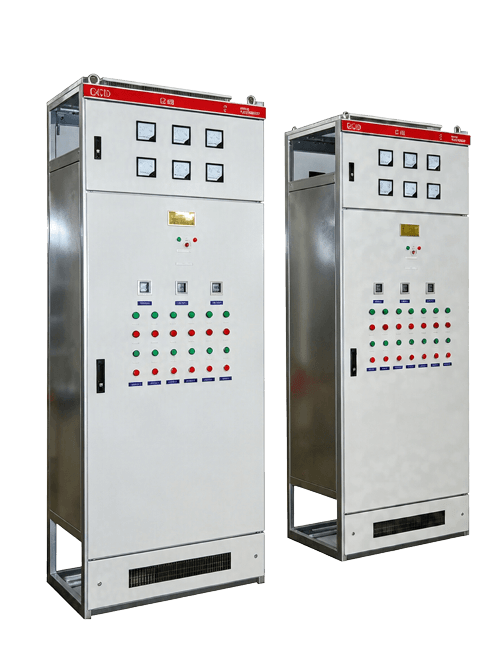
A practical Dual Power Distribution Box selection process can be divided into four stages.
The first stage is source definition. Identify both incoming supplies, their voltage and phase arrangement, expected availability, priority, capacity, and how the backup source becomes ready for use.
The second stage is load analysis. Determine which circuits require backup, their simultaneous demand, starting characteristics, interruption tolerance, and restoration behavior.
The third stage is transfer and protection design. Define source-failure criteria, transfer delays, return logic, switching sequence, interlocking, incoming protection, and downstream protective coordination.
The final stage is physical and lifecycle planning. Confirm incoming cable routes, outgoing circuits, enclosure dimensions, indication, maintenance access, labeling, documentation, and realistic expansion requirements.
Using these four stages keeps the project focused on how the backup system actually operates rather than treating the Dual Power Distribution Box as a standard enclosure with two incomers.
الخلاصة
A Dual Power Distribution Box is most valuable when backup power is treated as a complete operating strategy rather than simply the presence of a second supply. The box needs to understand the condition of both sources, transfer the correct loads according to defined logic, maintain proper source separation, coordinate protection, and make the operating state clear to maintenance personnel.
The design should begin by identifying the two sources and deciding which loads truly require continuity. Transfer timing, load restart behavior, incoming protection, neutral arrangement, cable routing, status indication, and future development should then be considered together.
Automatic transfer can reduce the need for manual intervention, but automation does not eliminate the need for good engineering. A system still needs appropriate source capacity, suitable protective devices, clear interlocking, organized wiring, and a transfer sequence matched to the actual loads.
When these requirements are defined before equipment selection, a Dual Power Distribution Box becomes more than a backup switching enclosure. It becomes a coordinated part of the distribution system that helps manage source changes in a predictable, maintainable, and practical way.
الأسئلة الشائعة
What is a Dual Power Distribution Box?
A Dual Power Distribution Box receives two available electrical sources and supplies downstream loads through a defined transfer arrangement. Depending on the configuration, it can monitor source conditions, perform automatic switching, distribute outgoing circuits, and provide status indication and alarms.
How does a Dual Power Distribution Box switch between two sources?
The controller monitors the defined electrical conditions of both sources. When the preferred source becomes unacceptable and the alternative source is available, the transfer mechanism changes the load connection according to its programmed delay, interlocking, and operating sequence.
Does a Dual Power Distribution Box provide uninterrupted power?
Not necessarily. Automatic transfer can restore supply without manual switching, but there may still be an interruption while a source failure is detected and the alternative source becomes available. Loads requiring zero-interruption operation may need additional system measures.
How should I size a Dual Power Distribution Box?
Size it from the actual backup load, simultaneous demand, starting conditions, incoming-source capacity, outgoing circuit requirements, conductor sizes, protection, transfer equipment, control components, cable space, thermal conditions, and realistic future expansion.
What should be checked before selecting a Dual Power Distribution Box?
Confirm both source characteristics, backup-load requirements, transfer logic, interruption tolerance, protection coordination, phase and neutral arrangement, cable entry, source-status monitoring, enclosure conditions, maintenance access, and expected future circuit development.
Need Help Choosing the Right Dual Power Distribution Box?
If you’re unsure how to configure a dual power distribution box for your source arrangement, backup loads, transfer logic, protection requirements, cable layout, or future expansion, our technical team can help review the complete distribution requirement and develop a configuration suited to the actual operating sequence.